Running delivery directly through your point of sale saves time, eliminates retyping, and keeps the kitchen on schedule. When the ordering app talks to the POS through an application programming interface, every line item, tax, and note arrives exactly where it belongs and the kitchen printer or display fires without delay. Below is a plain language look at what true integration means, the leading tools that provide it, and how to judge which mix best supports your own pace of service.
What POS integrated delivery means
A POS integration is a digital bridge that lets two independent programs share menu data, order details, payment information, and ticket status. The guest sees only a web page or phone app. Behind the scenes the order drops into the POS with correct prices, modifiers, and delivery or pickup notes.
Once the kitchen accepts the ticket, the updated status travels back to the guest so they know when to arrive or expect the driver. As SkyTab notes in its overview of integrations, linking the systems removes duplicate entry and matters more each year because worldwide food delivery could reach 320 billion dollars by 2029.
Software that connects to POS
Deliverect promotes a wide partner network across delivery apps, point of sale vendors, inventory programs, and last-mile couriers. The goal is a single pipeline rather than several tablets buzzing on the counter. Operators send all third party orders through that pipeline and watch them land in the POS.
Toast Online Ordering is built into Toast POS, so menu items, prices, and taxes stay aligned automatically. Olo fills a similar role for multi-unit brands that want to control every menu change from one dashboard and publish instantly to many stores.
Stream focuses on menu management. A restaurant maintains a single menu in Stream, pushes updates to every marketplace at once, and receives orders straight into the POS. Options to throttle orders, change prep times, or cancel from one screen help staff keep delivery promises during a rush.
Owners often trade notes on social sites. A Reddit thread praised Quantic POS for solid connections to DoorDash and Uber Eats, while others highlighted Toast for overall ease and Square for food trucks. Though anecdotal, such chatter reminds us that the best stack feels natural during peak periods, not only in a demo.
Choosing the right stack
Begin with menu sync. If you rotate specials weekly or run seasonal items, insist on one click publishing across all channels. Stream is built for that use case. Next test how orders appear in the kitchen. A clean handoff prints clear tickets or shows the order on the kitchen display with correct modifiers and courses.
Ask how the software handles cancellations, substitutions, refunds, and out of stock items. When inventory syncs both ways, an item that sells out in store disappears online before your customer can order it. Verify support for scheduled orders, varied pickup stations, or multiple delivery zones if you operate several locations. Each store should inherit its own hours and tax rules without manual edits.
Reporting is the final piece. You need order level data that reconciles with the POS closeout plus a breakdown of fees from every marketplace. DoorDash alone holds roughly 58 percent of United States third party traffic, so confirm that the connector supports current menu features, promotions, and coupons for that channel.
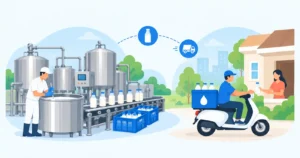
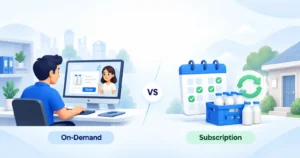
The same guiding rules apply outside restaurants. A bottled water route, weekly dairy drop, or home gas cylinder swap still benefits from one source of menu truth that pushes to the order system and returns correct status. See how this works for water routes or a similar flow in milk drops. Scheduled gas cylinder service follows the same model as shown in the LPG case.
Where Tarsil fits
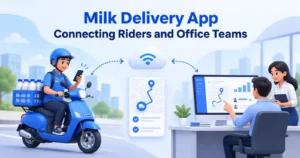
Tarsil is a cloud platform that links driver activity with office records. Couriers use a mobile app to receive stops, capture GPS verified signatures, collect payments, and send program controlled text updates. Managers watch routes live, reorder visits on the fly, and export proof of delivery without extra paperwork. While restaurants often run a front of house POS and a separate delivery connector, many teams layer Tarsil on top to manage their own drivers.
The system keeps customer ledgers, stock counts, and route performance current as soon as a driver completes a stop. A full list of functions appears on the feature page, which shows how live tracking and ledger sync complement the point of sale rather than replace it.