When a workday is packed with tight windows, empty jar returns, and sudden customer changes, water delivery software becomes the nerve center for the last mile crew. It gathers daily schedules, route plans, proof of delivery, cash and jar balances, and customer messages in one place. Studies show the last mile takes a large share of shipping costs, and many customers pay for same-day arrival. This has drawn sharp attention from restaurants, groceries, pharmacies, and service fleets to the final leg. A quick look at water delivery shows how pieces fit for subscription and on-demand drops.
Plan recurring routes with clear logic
Most bottled water runs mix daily, alternate day, or weekly subscriptions with one time orders. Teams rely on delivery software to set zones and sequences so a driver can move through neighborhoods without backtracking. Schedulers see every stop for the day on one board, drag a customer to another run when a truck is in the workshop, and push the update to the driver app. The planner cuts distance and idle time yet still respects local knowledge, because dispatchers can override sequences for building access or elevator windows. Managers with 100+ active subscriptions say this structure keeps paper slips and chat threads from spinning out.
Execute in the field with a focused driver app
The work happens at the curb, so the driver’s screen matters. A good app lists today’s run in the right order, shows exact quantity per stop, and updates if a customer pauses service mid-route. At each visit drivers capture proof of delivery—signature or photo—and can log cash collected or leave an unpaid balance for postpaid accounts. If your teams leave water at gates or lobby shelves, photo proof helps avoid disputes later. For a short review of options see this proof guide. Offline mode is crucial for low-signal areas. The app should save events and sync when coverage returns to keep office records and the customer ledger aligned.
Treat jars and returns as real assets
Water operations ship liquid and also manage a pool of returnable jars. General-purpose tools often ignore this. Water delivery software records how many jars sit with each customer, logs empty pickups at the door, and flags accounts whose jar balance passes a set limit. One industry guide notes that a single twenty liter jar can cost several hundred rupees to replace, and shrinkage costs add up quickly. Clear balance reports help match physical stock to system numbers across shifts and billing cycles. For teams that serve both homes and offices, the same workflow handles mixed payment terms and price tiers without separate notebooks.
Keep customers informed without extra calls
Customer messaging has moved from nice to have to required. Software can send a text when the truck leaves the depot, when a delivery is completed, and when a payment posts. Clear time stamps build trust and cut follow up calls. If your area has spotty coverage, queued messages should leave the phone once signal returns. Restaurants and offices appreciate receipt by text or a Bluetooth-printed slip for expenses. Companies that also run bottled milk or cooking gas often apply the same pattern. If you handle cylinders, this note on LPG delivery shows how field tracking and proof support safety checks, and milk vendors can compare tools in this milk software overview.
Link street activity to the back office in real time
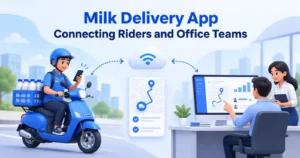
A key advantage of dedicated water software is that field actions update accounts, stock, and reports the moment they happen. When a driver posts a visit, the customer ledger reflects delivered quantity and any cash or payment link used. Jar moves update inventory. Dispatch can replay travel trails and time stamps to confirm visits. Everyone shares one picture, and end-of-day retyping disappears. We at Tarsil Systems provide a cloud ERP and rider app that capture deliveries, collections, jar moves, GPS verified visits, digital signatures, and SMS templates. For a broader view of what we cover beyond water, see Tarsil Systems.
Teams already delivering groceries or medicines will find familiar patterns. Route sequencing keeps vehicles moving. Driver apps reduce side chatter and missed notes. Proof of delivery protects unattended drops. Jar tracking treats returnables as assets. A live picture makes it simpler to shift zones when a van breaks down or a driver calls in sick. The final leg is often the most expensive, and customers pay for speed, so seeing and steering field work minute by minute is now standard for crews with recurring neighborhood routes.