Field drivers often spend hours in tunnels, basements, and rural valleys where the signal vanishes. An offline delivery app keeps the route alive in those gaps, letting water, milk, and LPG fleets finish the day without guesses or duplicate notes.
Why offline matters
If every tap depends on live data, the moment coverage drops orders freeze. With an offline design, the entire shift—customer details, pre orders, route, and catalogue—sits on the phone before the driver leaves the depot. The next stop remains visible even when the map background refuses to load. As soon as the signal returns the app syncs quietly, so the driver never repeats work.
Two daily scenarios show why this matters. First, deliveries booked in advance that must arrive in the right order with payment collected. Second, extra items sold on the doorstep when a shop asks for another crate or a household needs a spare cylinder. A good app also creates a shift summary the moment the driver finishes, ready for manager review.
Core features that keep routes moving
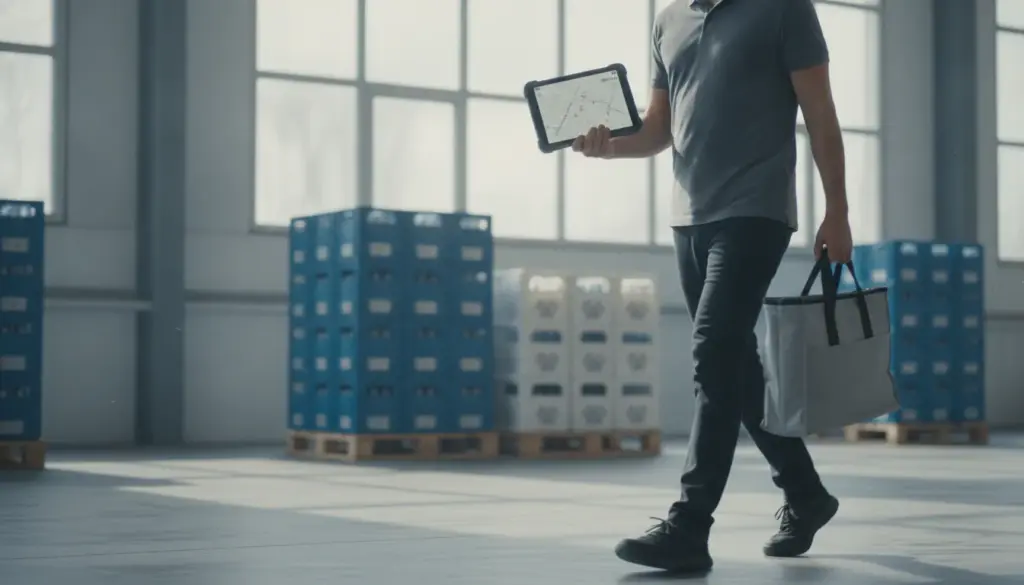
Preparation starts at the depot. Drivers open the app, see every stop, and read notes on timing, stairs, or gate codes. Office staff can plan the route and push it to the device so voice directions work with cached maps. If the road closes, the stop list still guides the driver even if the map view stalls.
Proof of delivery is essential in disputes. Signatures, photos, and short notes must attach to the right order in airplane mode. For more detail see our short proof guide. Cash and digital payments often mix in one round, so the app records method, amount, and reference while offline and reconciles later. At shift end a clear sales summary shows what was delivered, what returned, and what was collected.
Stable synchronisation is the make or break point. Drivers lose trust if failed uploads force them to rewrite notes or retake photos. Look for a system that shows the status of each task so the driver can see when a delivery is safely stored. For a broader view skim our public features list.
Workflows for water, milk, and LPG
Water routes are dense at dawn. The app should display each regular customer with usual quantities yet allow a quick change when someone adds a cooler or pauses service. More context sits under water delivery.
Milk distribution follows strict windows. Miss a slot and the load may come back. Instant switching between pre orders and small add ons lets drivers stay in flow; see the milk delivery notes for details.
LPG teams juggle safety rules and awkward access. Stairwells, elevators, and gated yards interrupt data entry, so screens must be simple with large buttons and offline checks to reduce errors. If a customer swaps cylinder size at the door, the driver must adjust the order with no spinning loaders. Some fleets print paper slips while others send digital receipts; both must tie back to the correct task whether or not the phone is online.
How to test before you choose
Hand a test phone to a few drivers and ask them to run a full mock shift in airplane mode. Can they locate the next stop without thinking? Add a new product on the doorstep? Mark a partial drop and leave a note? After reconnection confirm that every signature, payment, and photo appears on the manager screen with no manual merging.
Check navigation. Some apps embed maps while others open a separate program. Either works if the address and stop list remain visible when the driver switches back and forth. Watch battery use; offline caching should lower data pulls, not overwork the processor and drain power by midday.
Managers need a clear end of day view. A concise summary matching deposits, returns, and adjustments is worth more than a giant raw export. Field stories and checklists appear on our blog if you want deeper operational tips.
Our approach at Tarsil
Tarsil builds delivery software for essential goods, so poor connectivity shapes every screen. Drivers can handle pre orders, on the spot changes, proof steps, and shift summaries with no live signal. If your team is comparing options, a half day field trial with real stops quickly shows whether an offline delivery app matches your route playbook.