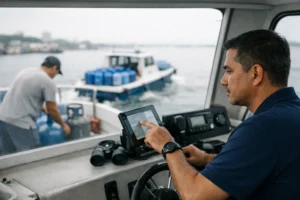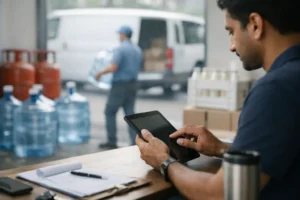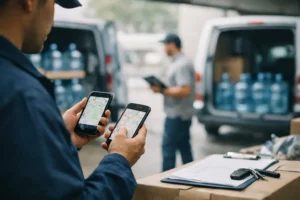
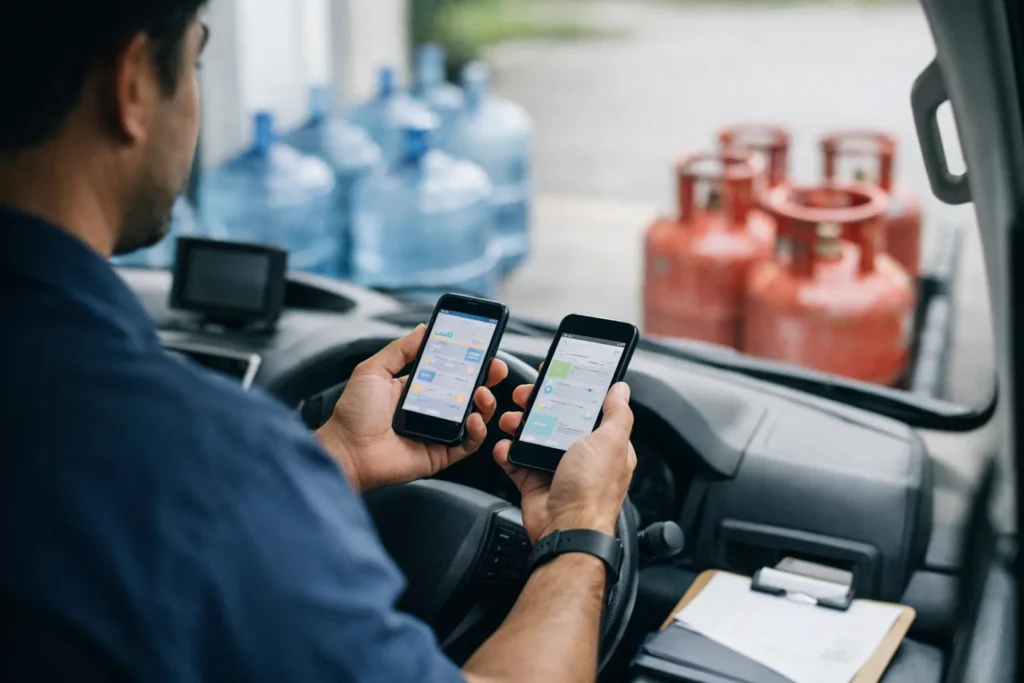
The best Delivery app for a water route is not necessarily the platform with the longest feature list. Water delivery brings daily challenges, including recurring household orders, bottle returns, cash collection, changing quantities, missed stops, and urgent requests. A suitable app should help dispatchers monitor every route while giving riders a clear record of customers, deliveries, payments, and empty containers.
Why comparisons need context
Many delivery software brands serve restaurants, couriers, or general parcel fleets. These tools may handle basic routing and proof of delivery, but water distributors often need stronger support for subscriptions and returnable containers.
For example, a rider may deliver three full bottles, collect two empty bottles, receive cash, and record a balance for the remaining container. If the app cannot record that transaction clearly, office staff may spend hours correcting customer records.
Brands should therefore be assessed against the way your company operates. A small bottled water supplier with two riders has different needs from a regional distributor serving homes, offices, and shops. Route density, payment methods, customer credit, bottle deposits, and internet coverage all affect which platform fits your business.
The available source material identifies Tarsil as a specialist option for water, milk, and LPG delivery operations. Its water delivery system focuses on recurring deliveries rather than single parcel movements. Meaningful comparisons with other brands would require verified information about their current features.
What a water route app should handle
A strong water delivery system should connect route activity with customer accounts. Dispatchers need to know which orders are planned, completed, postponed, or missed. Riders need customer addresses, quantities, payment status, and delivery instructions without searching through paper sheets or chat messages.
Real time delivery tracking can also help the office answer customers who ask where the rider is. The value comes from operational visibility, not simply from showing a vehicle moving on a map. Managers should be able to compare planned stops with completed visits and identify orders that need attention.
Route billing is another important test. Review how each brand records cash, credit, deposits, empty bottles, and outstanding balances. Ask whether a rider can correct an entry with manager approval and whether the office receives a clear record of that change. These controls can reduce disputes and make daily reconciliation less dependent on memory.
Tarsil combines tracking with operational automation for repeated delivery work. Its specialist focus may suit businesses that manage household routes and container exchanges. Its milk delivery tools also suggest support for subscription based delivery patterns, which have several practical similarities to bottled water distribution.
How to test brands before choosing
A product demonstration can look polished while hiding gaps that appear during a normal route. Give each shortlisted brand a realistic scenario that reflects your daily work. Include a customer who changes the quantity, another who returns fewer bottles than expected, a missed delivery, a cash payment, and a late order added after dispatch.
Watch how many screens the rider must open to complete each task. Check whether the office sees changes immediately and whether the system records who made each change. A clear activity history helps dispatch managers review unusual entries and resolve customer questions.
Test the app on the phones your riders actually use. Check how it performs with weak mobile coverage and ask what happens when a device loses its connection. Confirm whether route data remains available and how the app handles new entries when service returns. These details matter for fleets operating across Pakistan, the Gulf, and Africa, where route conditions and network availability can vary.
You should also review user permissions. Riders should see the information needed for their routes, while managers may need wider access to customer balances, route changes, and reports. Ask how the system records cancelled orders, payment corrections, and changes to container quantities.
During a trial, have dispatchers, riders, and accounts staff enter the same day of deliveries. Then compare the resulting customer balances, container records, completed stops, and unresolved exceptions.