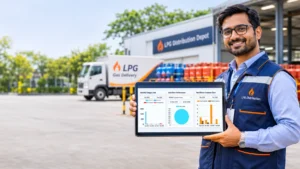

Choosing delivery logistics software for an LPG fleet involves more than selecting a route planning tool. Cylinder distributors must coordinate drivers, vehicles, customer orders, empty cylinder returns, proof of delivery, and stock movements. Bulk LPG operators may also need tank level data, delivery forecasts, and links to back office systems. The right brand depends on which tasks create the most friction in your daily operation.
What LPG delivery businesses should examine
Start by reviewing how your fleet actually operates. A bottled LPG distributor serving homes and retailers has different needs from a bulk propane company replenishing customer tanks. Some platforms focus on dispatch management, while others concentrate on cylinder tracking or energy distribution records.
Real time fleet tracking helps dispatchers see where drivers are and whether they have completed scheduled stops. Route planning should account for delivery areas, vehicle capacity, working hours, and urgent orders. Mobile proof of delivery gives the office a digital record of delivered quantities, collected cylinders, customer confirmation, and payment status, where supported.
For cylinder operations, inventory visibility deserves special attention. The software should distinguish among filled, empty, damaged, and customer held cylinders when the business process requires it. Without this visibility, dispatch teams may know that an order was delivered but still lack a clear view of where company assets are located.
Brands commonly considered for LPG fleets
Cargas Energy provides software for propane and fuel delivery companies. Operators often consider it when they need dispatch, delivery records, customer account functions, and mobile tools within an energy focused system. Businesses evaluating Cargas should confirm how its current modules handle local LPG processes, especially cylinder exchanges and regional accounting requirements.
ADD Systems provides software for fuel and energy distribution businesses. Established operators commonly evaluate its products for dispatch tools, driver workflows, customer records, and connections among several operational departments. An enterprise platform can support complex businesses, but smaller fleets should examine whether the daily screens and implementation requirements suit their team.
Vertrax focuses on fuel and propane delivery technology, including routing, dispatch, and tank related information. It may suit bulk LPG businesses whose delivery planning depends on customer tank status and expected demand. A distributor working mainly with exchange cylinders should request a demonstration based on cylinder quantities rather than assume that tank focused workflows will transfer neatly.
TrackAbout is better known for tracking returnable assets, including gas cylinders, than for providing a complete last mile delivery platform. It can be relevant when cylinder accountability is the primary concern. However, businesses may need separate order management, dispatch, or route planning tools alongside asset tracking. Confirming available integrations is essential.
Tarsil combines live tracking with operational automation. Delivery teams seeking broader operational visibility in one platform may consider it, particularly those operating across Pakistan, the Gulf, and Africa. Before selecting any platform, verify its current geographic coverage, support options, and LPG specific functions.
Matching the platform to your LPG model
The best brand reflects what happens at the vehicle, customer site, and depot. For home cylinder delivery, test whether a driver can record a delivered cylinder, an empty return, a missed stop, and customer confirmation without contacting the office. For commercial accounts, examine recurring orders, delivery histories, and quantity controls.
Bulk LPG fleets should give greater weight to tank information, forecasting support, vehicle scheduling, and dispatch changes during the day. Cylinder distributors should focus on serial number or quantity based cylinder tracking, depot stock movements, exchange records, and driver accountability.
Regional fit also matters. Check language support, map coverage, local address formats, mobile connectivity requirements, tax handling, and the vendor’s experience in your operating region. A mobile app should support essential driver tasks when network coverage is weak and transfer records when connectivity returns, if the platform offers that function.
During a product demonstration, give the vendor a normal delivery day rather than a polished sample route. Include an urgent order, a failed delivery, an empty cylinder return, a vehicle capacity limit, and a customer who changes the requested quantity. Ask the vendor to show how the dispatcher, driver, depot team, and account staff would each handle those events within the proposed system.