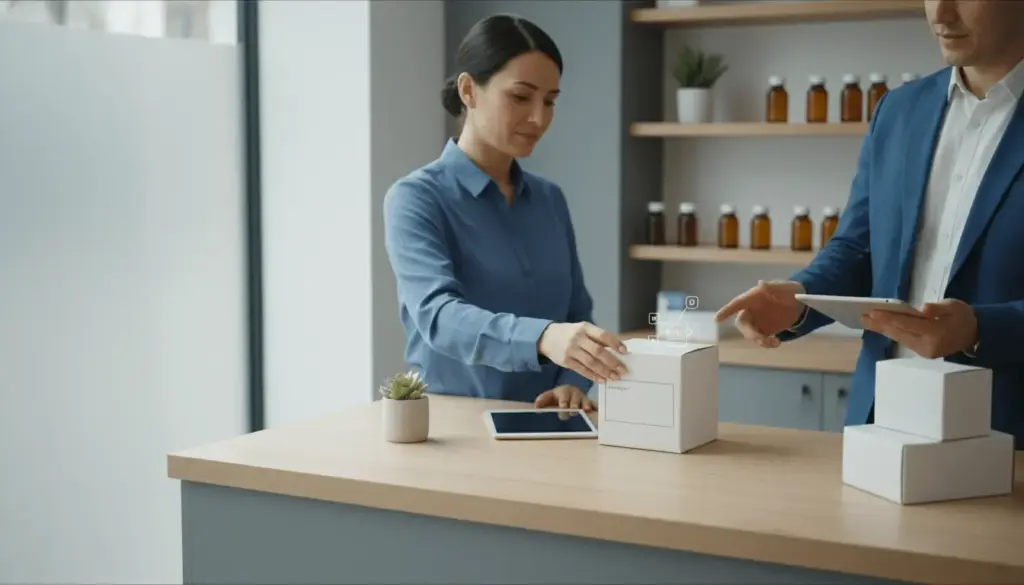
Small pharmacies can indeed adopt delivery software that keeps protected health information secure all the way from the dispensary to the patient’s door. The test is whether the platform controls every handoff without showing personal details on labels, texts, or unsecured screens.
Regulators pay growing attention to delivery workflows, so even a shop that runs only a few routes each day needs tools designed for health care rather than for generic couriers.
HIPAA requirements for delivery
Once a package leaves the pharmacy, the Health Insurance Portability and Accountability Act still applies. Protected health information may appear on a driver’s phone, on printed labels, in electronic proof of delivery, or in text messages.
Common weak spots include shared logins, lost devices, and free consumer apps that transmit data in plain text.
A compliant setup therefore needs tight access control, minimal visible patient data, encryption during transport and storage, and a verifiable record of every event at each stop.
Compliance features to look for
- Complete audit trails that log time, GPS position, and proof of delivery for each handoff.
- Unique driver credentials with role based permissions and the ability to revoke access instantly if a phone is lost.
- Encryption in transit and at rest so prescription data never travels as clear text.
- Real time vehicle tracking that lets managers replay a route when a delivery is questioned.
- Offline capture of signatures and photos with automatic sync when the device regains a signal.
- Templates for SMS that avoid mentioning medication names or other sensitive details.
- Configurable photo proof with documented patient consent before any image is stored.
- Direct integration with the pharmacy management system so the delivery log and the dispensing record always match.
These safeguards create the documentation auditors expect without slowing drivers.
Workflows for a small team
Begin by mapping a normal delivery day. Note where protected data appears, how drivers sign in, and what is printed or displayed. Limit the driver view to the essentials. Route planning that groups stops by neighborhood and time window reduces juggling at the curb and lowers fuel use.
If you already practice medication synchronization, dispatch can align routes with refill cycles so one trip covers multiple prescriptions for each patient.
Drivers should confirm identity at the door without stating drug names. Provide a short script, a rule for second attempts, and a clear moment when the order returns to the pharmacy. When an exception occurs such as a refrigerated item that cannot be left unattended the software should guide the driver step by step instead of forcing memory.
If the platform offers a driver mobile app, confirm that it captures signatures, coordinates, and time stamps even when offline and blocks screenshots or copying notes into other apps.
Where Tarsil Systems fits
Tarsil Systems is a cloud based enterprise resource platform with an integrated driver app that links field activity to back office records in real time. Visits are GPS verified, signatures are digital, customers receive SMS updates, and all data is stored on Amazon Web Services with encryption and multifactor authentication.
Managers follow travel trails on the TrackBoard, compare claimed visits with actual coordinates, and handle accounts and stock from one dashboard. The interface is simple enough for seasonal drivers to learn quickly, an advantage for small teams that scale up during flu season.
Visit the Tarsil site to see how connected records remove extra tasks from pharmacists who need to focus on care.
Your due diligence
Before signing a contract, insist on a live demonstration of how the product guards patient data during dispatch, on the handset, and after delivery. Ask for sample audit trails that include signatures and GPS points, and verify that administrators can lock out a device the moment it goes missing.
Check that data are encrypted both during transfer and while stored. Review the default SMS texts to confirm they reveal no protected information and see how the system captures patient consent for photos.
If the software integrates with your pharmacy platform, walk through the entire flow from dispensing to reconciliation. Finally, confirm record retention periods, the process for restoring service when a phone is lost or a package is misrouted, and the steps a driver follows when bad weather forces a second attempt.
The right solution supports these safeguards without adding friction to the daily route, which is why delivery software purpose built for health care is a safer bet than a generic parcel tool.