A modern water delivery management system gathers route planning, driver guidance, returns handling, billing and customer communication in one playbook the entire team can rely on. Bottled water has been the top packaged beverage in the United States for nine consecutive years, reaching 16.4 billion gallons in 2024 and generating 50.6 billion dollars in retail sales. When volumes and stops rise, the margin between a calm day and a chaotic one depends on how predictably routes repeat, how well each stop is documented and how quickly information travels between office and field. If you are studying your options, begin by mapping the workflows that matter most to your staff and customers.
Why repeatable routes drive performance
Recurring route management is the heart of home and office delivery. Customers choose a cadence—weekly, biweekly, monthly, or on demand. Drivers need steady territories and clear sequences, while dispatchers must move stops when a client skips a week or orders extra jugs. The bottled water model adds complexity because empty containers return, are cleaned, and reused. Stop notes need drop and pickup counts, and the depot must see what will arrive back.
Stable territory rotation supports training, reduces mileage and lets customer service answer questions without calling the driver. If you are weighing water delivery software, check that it stores recurring schedules in one place and makes mid-cycle changes easy.
Clear proof at every doorstep
Most residential and office deliveries are unattended, so every stop must leave a trace. Leading platforms record photos, signatures, or barcode scans that show where jugs were left and how many were collected. A comparison of industry methods is available in this proof resource. With dependable evidence, customer support can resolve tickets without digging through voicemail or driver memories.
Tools that guide driver and depot
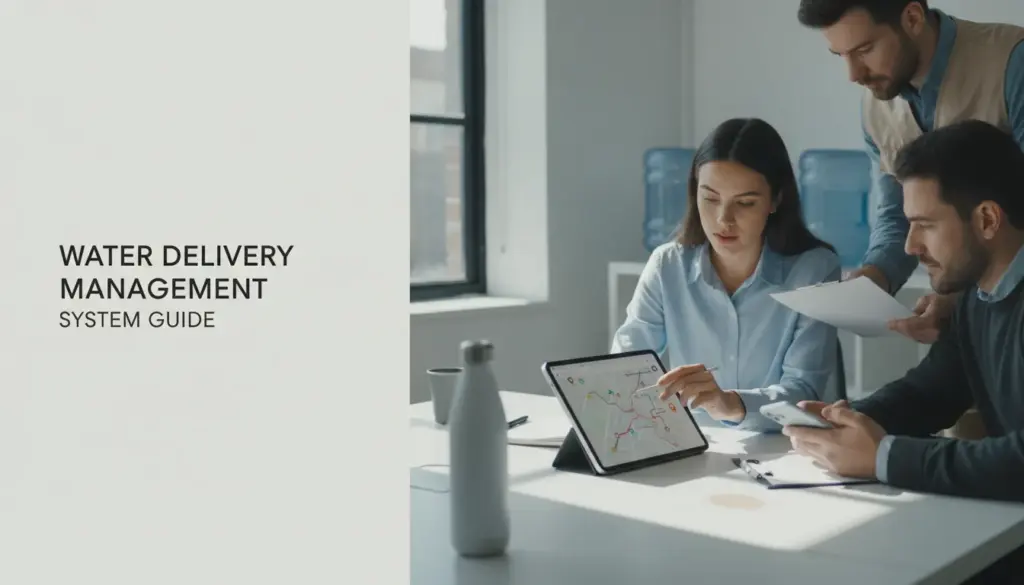
Route optimization software arranges stops to cut drive time while honoring delivery windows, truck capacity and service constraints. For water operators and dairy houses, a good planner also counts cooler service, dispenser swaps and returns. The driver app should provide turn-by-turn directions, bottle deposit prompts and one-tap photo capture. Barcode scanning simplifies asset tracking. When a driver replaces a leaking dispenser or retrieves a rental cooler, the app must record the asset identification and condition in language the service desk can read.
Customer experience starts long before the truck arrives. Simple portals let households change schedules, add cases or set vacation holds. Program-controlled delivery alerts paired with photo confirmation shrink support volumes. Suppliers that carry propane cylinders or gas bottles rely on specialized LPG software that tracks deposits, returns and safety checks in much the same way water distributors manage jug flow.
Billing and reporting that follow the route
Many operators seek billing that links to route data so orders and payments remain in step. Automatic recurring invoices, card or ACH autopay and deposit accounting keep the back office aligned with field activity. Competitor platforms advertise consolidated customer records that include delivery history and notes. This view helps when a client calls about a missed pickup or a confusing balance.
Managers also need reports. A daily summary should list finished stops, partials, returns and exceptions. Over time, consumption trends reveal when to split a territory or adjust frequency. Inventory counts for bottles, caps, cups and rental equipment keep the warehouse synchronized with deliveries. Some systems push invoices and payments into general accounting tools, but the test is whether customer names and balances match on both sides. Careful data mapping during setup prevents reconciliation headaches later.
Independent operators who share their experiences in reviews often highlight free entry tiers, mobile workflows and correct bottle deposit tracking as the features that save the most time.
Choosing a single platform
Walk through a day step by step. Note what the dispatcher does, what the driver taps at each stop, how deposits post to the ledger and how customer service retrieves proof of delivery. If you also handle milk, remember that early morning windows and freshness rules tighten your margins. If you distribute gas cylinders, include safety inspections and asset swaps in the checklist. A sound water delivery management system will support these variations without forcing workarounds. Pilot on one territory, review photo quality and signature clarity, and make sure the office can answer client questions without chasing drivers.
At tarsil we concentrate on recurring schedule management, proof of delivery and integrations that connect operations with customer accounts and payments. You can examine core features such as route optimization, driver guidance and real-time confirmations. If your business spans bottled water, propane or other returnable assets, choose one platform so teams share training and processes instead of juggling multiple tools.