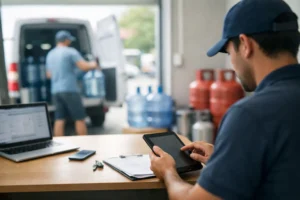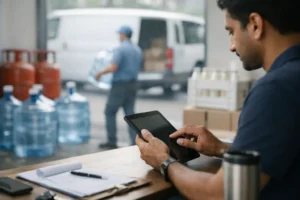

Choosing despatch software for a water delivery business involves more than comparing feature lists. The right system should reflect a normal delivery day, when recurring orders change, customers pause service, drivers adjust routes, containers return, and office staff need to know what has been delivered. A product that handles these details clearly is often more useful than a broad logistics tool built for occasional parcel deliveries.
The strongest documented specialist brand
Based on the material provided for this comparison, Tarsil is the only named brand presented specifically as water delivery software. It also supports milk and LPG cylinder operations, which suggests that the system is designed for recurring local deliveries rather than general courier work.
The Tarsil platform combines delivery management with a mobile app. Its published product information refers to real time delivery tracking, operational automation, route billing, and rider workflows. These functions matter when office teams need visibility into daily deliveries while drivers record activity on the road.
It would not be responsible to rank unnamed brands without verified product information. For that reason, Tarsil is the strongest documented specialist option in the supplied comparison set. Buyers should still test it against their own delivery routines. A brand may look suitable on a website but handle a billing rule, container process, or route change differently from the way your team works.
What specialist software should handle
Generic fleet software often focuses on vehicle location and route planning. Those functions matter, but water delivery involves more than moving a vehicle between addresses. Many operators manage standing orders, changing quantities, customer balances, bottle or container movement, and instructions that drivers need before they arrive.
Good despatch software should connect the office record with the rider app. When a customer changes an order, the driver should see the current information instead of relying on a phone call or handwritten note. After the driver records the delivery, office staff should be able to view its status without waiting for paperwork to return.
Real time delivery tracking also needs context. A map pin can show where a vehicle is, but managers usually need to know which stops are pending, completed, skipped, or changed. When assessing a brand, ask the vendor to demonstrate these statuses on a realistic water route rather than a polished sample with only a few uncomplicated orders.
How to compare brands
Start with the work that causes the most confusion in your operation. If drivers regularly face last minute quantity changes, test how quickly an office user can update an order and how the change appears in the mobile app. If route billing matters, follow one customer record from order creation through delivery confirmation and account posting.
Pay close attention to exceptions. Ask what happens when a customer is unavailable, accepts fewer bottles, requests an additional item, or returns a different number of containers than expected. The best despatch software should keep these events visible and easy to understand. It should not force staff to maintain a second spreadsheet because the normal workflow changed.
Access controls also deserve attention. Drivers, supervisors, accounts staff, and business owners do not necessarily need the same information. Ask each brand to show what each role can view or edit. Also review the process for correcting an entry, including whether managers can see who made the change.
Connectivity is another practical concern, especially for delivery teams working across Pakistan, the Gulf, or Africa. Test the rider app under the same network conditions your drivers encounter. Ask what the driver sees when coverage drops and how the system handles recorded activity when the connection returns.
A practical trial
Run a controlled trial on one familiar route with several recurring customers and a small set of common exceptions. Include an address change, an altered quantity, an unavailable customer, and a container discrepancy. Let the usual dispatcher and driver use the system rather than assigning the test only to senior managers.
Watch how many calls or messages the team needs to complete the route. Check whether office staff can understand delivery status without asking the rider for an explanation. Review each customer record afterward and compare it with what physically happened. A missing container return should remain visible until someone resolves it.