Choosing a water delivery management system for a tight crew is different from buying software for a national fleet. You need quick setup, clear daily routines, and tools that match bottled-water realities such as recurring drops, deposits, and proof of delivery. Industry surveys quoted by the Guideflow blog show that sixty two percent of providers process more than one thousand monthly orders with digital schedulers, and demand is expected to rise well into 2032. When you juggle WhatsApp, spreadsheets, and paper tickets, the gap turns into missed time windows and longer days.
What small teams really need
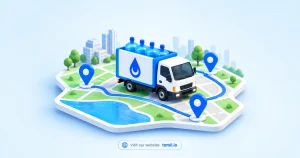
Start with route planning that respects time promises and customer priorities. One screen should sequence stops, flag traffic constraints and assign territories so drivers are not crossing paths all day. A simple driver app with turn-by-turn guidance and tap-to-complete must capture proof of delivery with photos, notes, and signatures for doorstep accountability. If you sell subscriptions, look for recurring orders that can adjust quantities or pause when customers travel. Bottle tracking matters as much as miles because lost empties eat margins. You also want text or email alerts that confirm schedules and cut down on nobody-home visits.
Inventory basics should live in the same program. You do not need an enterprise stack, only enough control to see full and empty counts by route, reconcile returns at end of day, and record payments whether by card gateway or cash on the truck. A small customer app lets loyal accounts place top-ups, manage deliveries, and check balances. For a picture of these building blocks see the Water delivery overview, then dive into specific features that match your run sheet, such as recurring orders, basic inventory, or photo-based confirmation.
How current tools stack up
Comparison guides often group products by their strongest trait. Some platforms focus on deep routing rules that shine as you scale or face tight constraints. Others target first-time adopters and keep the interface clean with fast wins like automatic route sequencing. A third category serves bottled-water specialists, bundling customer and driver apps with bottle return handling and subscription billing. TrakOp highlights customer control, a business dashboard and empty bottle management. WaterFlex leans into territories, service scheduling, billing and equipment tracking. Independent guides from eLogii and others note that several choices suit medium to large operations, while lighter tools help small businesses taking a first digital step. Many reviews skip clear pricing, so test a shortlist rather than guess. Neutral software reviews can help you narrow the field before booking demos.
Fit with day-one realities matters for a small crew. Make sure the platform you choose can handle route changes at midday, fast proof capture and bottle returns without turning every task into office work. If you also carry milk, fast moving consumer goods or gas cylinders, check that the same driver app supports those workflows to avoid a second system.
A one week evaluation plan
Give yourself five working days and treat the trial as live. Day one import a customer list, then create a sample route with real-time windows to see if the plan keeps your promises. Day two send a driver out with a phone, capture photos and signatures, and note any friction at the doorstep. Day three activate subscriptions for a few accounts, pause one, reschedule another, and verify that invoices change automatically. Day four issue bottle deposits, log empties on return, and match counts against warehouse records. Day five invite two customers to place orders through the portal and watch how alerts and tracking feel from their side. If proof capture is high on your list, this brief proof guide shows a clean tap-to-archive flow.
Multi-vertical teams face similar last-mile pain. LPG routes need cylinder logging and safety notes. Milk runs rely on subscriptions with seasonal pauses. Fast moving consumer goods vans need clear territories and curbside invoicing. A single driver app that supports all three keeps training short and days predictable. For crews that also deliver cylinders, review dedicated options under LPG cylinder.
Where tarsil fits
At tarsil we focus on practical setup for small crews, with route planning, recurring orders, bottle returns, and proof of delivery arranged around how drivers actually move through the day. The learning curve stays low for owners who drive two days a week and dispatch the rest. If you are comparing software now and want something the team can use without a long onboarding cycle, start with a small test route, record a few deliveries, and watch your paper trail turn into a digital record your customers trust.