
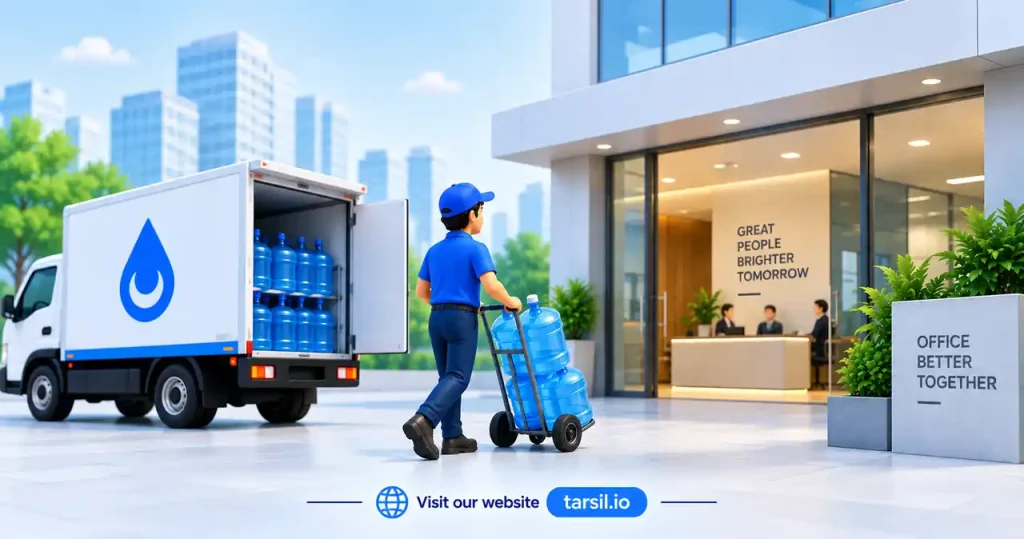
Corporate water delivery looks like the easiest money in the business, right up until it isn’t. Yusuf found that out in Dubai. He landed his first big office account, forty 5-gallon bottles a week, and celebrated for about a month.
Then the cracks showed. The office wanted every delivery before 9 am, paid on 45-day terms, and the procurement manager kept emailing changes to the standing order. One good account was quietly bending his tidy home route out of shape.
This guide covers how to win office and corporate accounts, price them properly, and serve them well, without letting a single big client wreck the routes you already run.
Why Corporate Water Delivery Pays More and Costs More
A corporate account is a different animal from a household one. It brings real upside, yet it carries hidden costs that home customers never do.
On the good side, you get volume, predictable orders, and a client who rarely disappears overnight. On the harder side, you get credit terms instead of cash, fixed delivery windows, invoices that get checked line by line, and a contact who negotiates rather than just receives. So the money is bigger, but so is the effort behind it. Winning at corporate water delivery means going in with both eyes open, not just chasing the headline order size.
What Is Corporate Water Delivery?
Corporate water delivery is the supply of water to businesses rather than households, on account-level pricing, agreed delivery schedules, and usually credit terms with monthly invoicing. It serves offices, hotels, clinics, factories, and labour accommodation, where volume is higher, and the buyer is a business, not the person drinking the water.
You will also hear it called b2b water delivery, an office water delivery service, or commercial supply. Whatever the label, the model differs sharply from doorstep home delivery and relies heavily on the operational systems behind a water delivery business that actually scales.
Office Water Delivery Service: How Corporate Accounts Differ from Homes
An office water delivery service rests on three differences that reshape how you operate. Understand each before you sign.
Volume and predictability: the real upside
Offices order more and order steadily. A single account can equal ten homes, and it rarely cancels on a whim, so your revenue base gets stronger and easier to forecast.
Credit terms instead of cash at the door
Homes usually pay on delivery. Businesses expect to pay later, often on net-30 or net-60 terms, which are standard trade-credit arrangements across B2B commerce (how net payment terms work). That gap between delivery and payment is money you finance in the meantime.
A procurement contact, not the person drinking the water
At a home, the person receiving the water is the customer. At an office, a procurement or admin contact places orders, queries invoices, and negotiates rates, while the people actually drinking it never speak to you. So your relationship management changes entirely.
Commercial Water Supply Without Wrecking Your Home Routes
Here is the tension at the heart of commercial water supply: offices demand structure, while home routes thrive on flexibility. Serve them badly together, and both suffer.
The mixed-route problem
An office wants delivery inside a tight morning window. A home is happy any time that day. Force both onto one thoughtless route, and your rider either misses the office window or wastes an hour waiting to hit it.
Using zones and scheduling to serve both
The fix is deliberate scheduling, not heroics. Group corporate accounts with tight windows into their own early slots, then let home deliveries fill the flexible hours around them. Good zone-wise delivery planning keeps the two customer types from fighting for the same minutes.
Corporate Water Supply Contracts and the Credit Risk Nobody Mentions
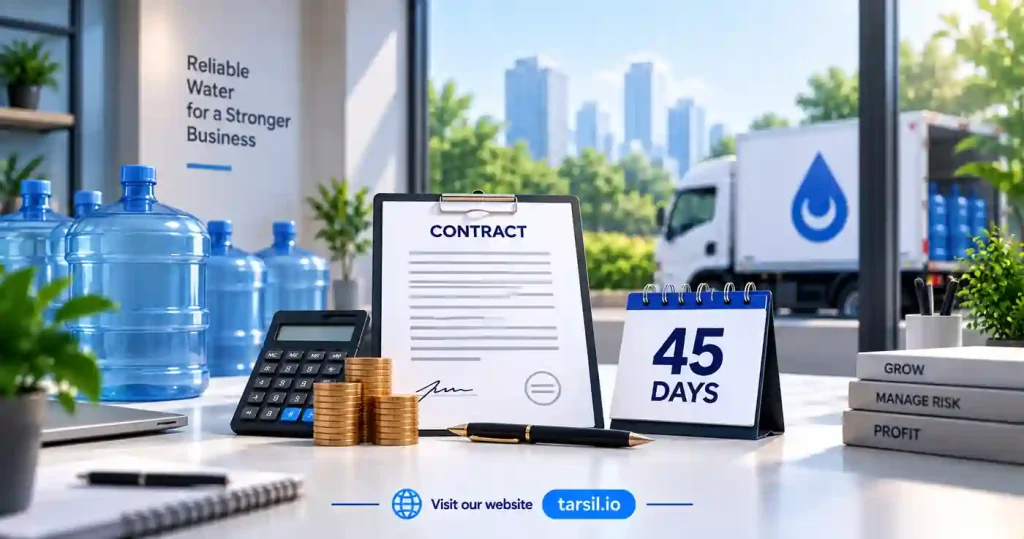
Everyone talks about winning corporate water supply contracts. Far fewer talk about the credit risk baked into them.
Why 45-day terms are a loan you didn’t plan to give
When you deliver now and collect in 45 days, you are lending that client money, interest-free, for a month and a half. Multiply that across several big accounts, and a profitable business can still run short of cash. So treat every credit account as a loan you are choosing to make.
Setting credit limits and account-level pricing that protect you
Protect yourself with clear rules. Set a credit limit per account, agree on payment terms in writing, and price corporate accounts to reflect both their volume and their slower payment. A bigger order at a worse rate on longer terms is not always the win it looks like.
Water Delivery for Offices: Meeting Service Expectations Homes Don’t Have
Handling water delivery for offices well means meeting expectations a household never sets. Offices want a reliable delivery window, a named person to call, invoices that arrive on time and add up, and fast answers when something goes wrong. Miss those, and even a high-volume account starts shopping around. Meet them consistently, though, and corporate clients tend to stay for years, which is exactly what makes them worth the extra effort.
Signs a Corporate Account Is Costing You More Than It Pays
Not every big account deserves to stay. Watch for these warning signs.
- The order changes so often that your rider never knows the real number.
- The balance keeps aging past your agreed terms, month after month.
- The delivery window forces a costly detour that disrupts your home route.
- One account is so large that losing it would threaten the whole business.
Where Tarsil Fits Into Your Corporate Water Delivery
Tarsil handles the parts that make corporate accounts hard: account-level rates, credit terms and limits, standing orders that survive constant edits, and scheduling that keeps office windows from breaking your home routes. See how account records and finance connect on the features page.
That structure let Yusuf keep his Dubai office account and his home route instead of choosing between them. The big order finally fit his day, rather than bending it out of shape.
The Bottom Line
Chase corporate accounts, but chase them with your eyes open. Price for the credit risk, protect your home routes with real scheduling, and walk away from any account that costs more than it pays.
Do that, and corporate water delivery becomes the steady, high-volume base your business grows on, rather than the account that quietly breaks it.
Ready to win office accounts without wrecking your routes?
Book a Free Demo → We’ll show you how account pricing and mixed routes work together.
FAQs: Corporate Water Delivery Questions Operators Ask
What is corporate water delivery?
It is supplying water to businesses rather than homes, usually on account-level pricing, agreed schedules, and credit terms with monthly invoicing. Offices, hotels, and factories are typical clients.
How is an office water delivery service different from home delivery?
Offices order more, pay later on credit, expect fixed delivery windows, and deal through a procurement contact. Home customers pay on delivery and stay flexible on timing.
Should I offer corporate accounts credit terms?
Often you must, to win the account. Just treat those terms as a loan: set a credit limit, agree the terms in writing, and price for the delay.
How do I stop office accounts from disrupting my home routes?
Schedule deliberately. Group tight office windows into their own early slots, then fill the flexible hours around them with home deliveries using clear zones.
How do I price a b2b water delivery account?
Factor in volume, delivery windows, and slow payment together. A large order on long credit terms at a thin rate can quietly lose you money.
Does corporate water delivery work across the GCC, Africa and Pakistan?
Yes. Offices, hotels and labour accommodation across Dubai, Doha, Manama, Nairobi, Lagos and Pakistan all rely on corporate water delivery, adjusting only local norms and payment habits.