Dairy industry software almost cost Brian two different jobs at once. His dairy in Nairobi pasteurizes and bottles its own milk. Then it delivers to shops and homes on its own routes. A vendor pitched him one system that claimed to cover everything from the farm to the doorstep.
So Brian signed up, expecting one dashboard for both sides of his business. Instead, he got a strong batch-tracking module and a route planner that barely worked. The vendor had built it for processing first. So distribution became an afterthought, bolted on top.
For a complete overview of how to handle your delivery logistics from start to finish, read Milk Delivery Software: The Complete Guide to Daily Routes and Monthly Billing.
What Is Dairy Industry Software?
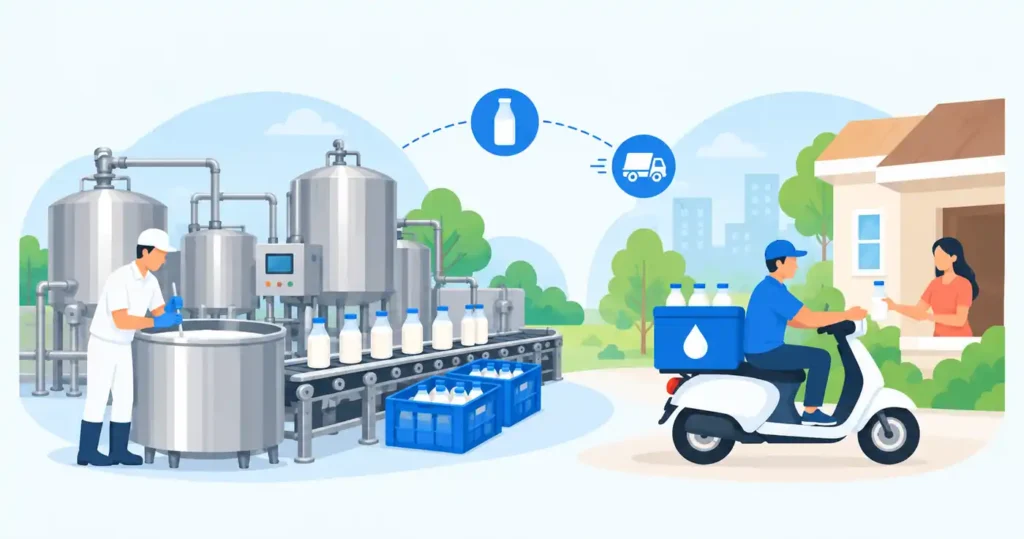
Dairy industry software covers two different jobs. Production software runs what happens inside the plant: processing, batching, and quality control. Distribution software runs what happens after the milk leaves the plant: dispatch, routing, billing, and collections. Most dairy businesses need pieces of both, rarely from the same strong vendor.
Dairy Production Software, Explained
Production software tracks a batch from raw milk intake through pasteurization, packaging, and quality checks. So it exists to prove what happened inside the plant, for compliance and traceability.
Dairy Distribution Software, Explained
Distribution software takes over once a batch leaves the plant. It manages which rider delivers what, to which stop, on which route, and who still owes money for it.
Why Treating Dairy Production and Distribution Software as One System Backfires
An “all-in-one” claim rarely means equally strong on both sides. Most dairy industry software started as either a production tool or a distribution tool. Then they added the other side later. So one half usually feels thin. Production and distribution also run on different daily rhythms. A plant runs on batch cycles and lab results.
Meanwhile, a distribution route runs on a morning deadline, a rider’s location, and a customer’s payment status. Forcing both rhythms into one generic workflow is what left Brian with a route planner that couldn’t keep up.
Common Challenges in Dairy Distribution Operations
Distribution carries operational risks that production software was never built to handle.
Expiry-Sensitive Stock in Dairy Distribution
Milk and dairy products carry a short shelf life once they leave cold storage. Because of this, traditional “first in, first out” (FIFO) inventory methods are rarely enough for perishable goods. Instead, distribution relies on First Expired, First Out (FEFO) management to prioritize shelf life over arrival order. However, poor warehouse layouts and manual expiration tracking remain the biggest barriers to actually moving that short-dated stock first.
Returns and Crate Reconciliation in Distribution
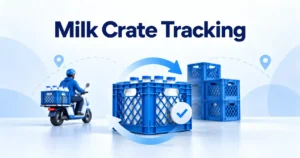
Unsold stock and empty crates both have to come back to the depot. Then they need logging against the right account. Otherwise, a dairy loses track of both inventory and the deposits tied to it.
Delivery Cost per Stop and per Liter
A distribution business needs its real cost per stop and per liter delivered, not a rough estimate. Instead, it’s guesswork whether a route or a customer is actually profitable. To learn how to lock in those margins early in the day, read our guide: Milk Delivery Route Planning: Why Your Routes Are Won or Lost Before 6 AM.
Essential Features to Look for in Dairy Distribution Software
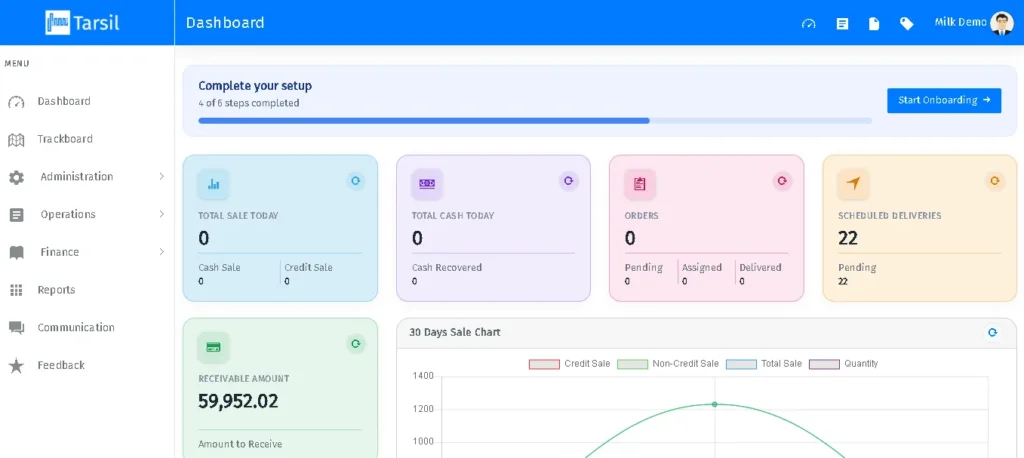
A few features matter more than the rest once a dairy moves past spreadsheets and paper routes.
Route and Delivery Management in Distribution Software
Routes should sequence automatically around subscriber stops and absorb daily changes. Instead, they shouldn’t rely on a rider’s memory or a redrawn paper map.
Billing and Collections for Recurring Customers
Recurring customers need one running account, not a fresh invoice guessed at every month. Cash and digital payments both need to tie back to that same account.
Stock, Returns and Crate Tracking for Distribution
Every crate, bottle, or can going out should be traceable back to its account. Then it should be traceable again the moment it comes back empty.
Dairy Production Software vs. Distribution Software
| Factor | Production Software | Distribution Software |
| Core job | Processing, batching, quality control | Dispatch, routing, billing, collections |
| Daily rhythm | Batch cycles and lab checks | Morning deadlines and live routes |
| Key records | Batch IDs, QC results, compliance logs | Stops, accounts, payments, crates |
| ERP integration | Usually feeds inventory and compliance data upward | Usually feeds sales and collections data upward |
Most dairy businesses eventually run both, connected through shared data rather than one shared interface.
A Buyer’s Checklist for Choosing Dairy Industry Software
Work through these before signing anything, since each one is also where buyers most often get it wrong.
- Batch and expiry tracking: Confirm it’s a real feature, not a label field. Without real FEFO logic, a system won’t stop old stock from sitting at the back.
- Route optimization: Ask for a live demo on your own address list, not a slide showing someone else’s routes.
- Connectivity: Make sure the rider app works offline and syncs later. Most delivery rounds run through patchy signal at some point.
- Integrations: Check exactly what it connects to today, not what the vendor claims is coming later.
- Data portability: Confirm you can export your own customer and transaction data if you ever need to switch systems.
- Pricing: Get the full cost per rider or per route in writing, not a headline number that excludes add-ons.
How to Measure the ROI of Dairy Distribution Software
A simple scenario shows how small efficiency gains can add up. Still, this is a hypothetical calculation, not a verified industry figure or a Tarsil result.
| Metric | Before | After |
| Daily sales volume (example) | 10,000 liters | 10,000 liters |
| Product loss rate | 3% | 2% |
| Volume lost per day | 300 liters | 200 liters |
| Volume recovered per day | N/A | 100 liters |
| Estimated annual value* | N/A | ~$54,750 |
*Illustrative only, at an assumed $1.50 per liter over 365 operating days. So it excludes software cost, implementation, and margin effects. Instead, run the same math on your own numbers before trusting any vendor’s savings claim.
Choosing Dairy Industry Software Across Pakistan, the GCC and Africa
In Nairobi, Brian’s dairy runs its own small-scale processing alongside its routes. So the split between production and distribution software matters daily. GCC dairies in Riyadh and Dubai more often buy milk already processed. So they can focus their software budget on distribution alone. Meanwhile, Pakistani dairies in cities like Lahore sit on both sides of that line. It depends on whether they process their own milk or just move it. Still, the underlying choice doesn’t change by region. A dairy business needs distribution software built for distribution, wherever it operates.
Why Tarsil Fits Dairy Distribution Software Needs
Tarsil is built for the distribution side of dairy industry software, not the production side. It runs rider routes and recurring billing, with cash and digital collections tied to one account. Then it also tracks returnable assets like crates and bottles on that same record. So a dairy using Tarsil for distribution should still run separate production software for processing and quality control. Tarsil doesn’t claim to replace that. Over 400 businesses across 77+ cities currently run their distribution operations through Tarsil.
See How Tarsil Works → Walk through routing, billing, collections, and crate tracking in one system.
Which Dairy Industry Software Is Right for Your Business?
Start by being honest about which side of the business is actually struggling. If it’s the plant, you need production software with real batch and quality tracking. If it’s the routes, the billing, or the crates coming back missing, you need distribution software built for exactly that.
Once you’ve separated the two decisions, choosing dairy industry software gets much easier.
If daily quantity changes and rate adjustments on the distribution side still feel messy, that’s worth solving next.
Ready to fix the distribution half of your dairy business?
FAQs: Dairy Industry Software Questions
What is dairy industry software?
It’s software that runs a dairy business, split between two jobs. One side is production software, for processing and quality control. The other is distribution software, for routes, billing, and collections.
How does production software differ from distribution software?
Production software tracks what happens inside the plant, batch by batch. Distribution software tracks what happens after milk leaves the plant, stop by stop.
What features do milk distributors need most?
Route planning that adapts daily, billing tied to one customer account, and returnable-asset tracking for crates and bottles. Expiry visibility matters too, for short-dated stock.
How do these systems reduce expiry risk?
By flagging older batches first and surfacing what’s close to its shelf-life limit. That beats relying on memory or a paper log.
What does dairy distribution software typically cost?
It varies by rider count, route volume, and the features included. So get a full written quote per rider, not just a headline price.
Can dairy distribution software integrate with existing production or ERP systems?
Often, yes, through shared customer, inventory, or financial data. Confirm the specific integration before buying, since claims here vary a lot by vendor.