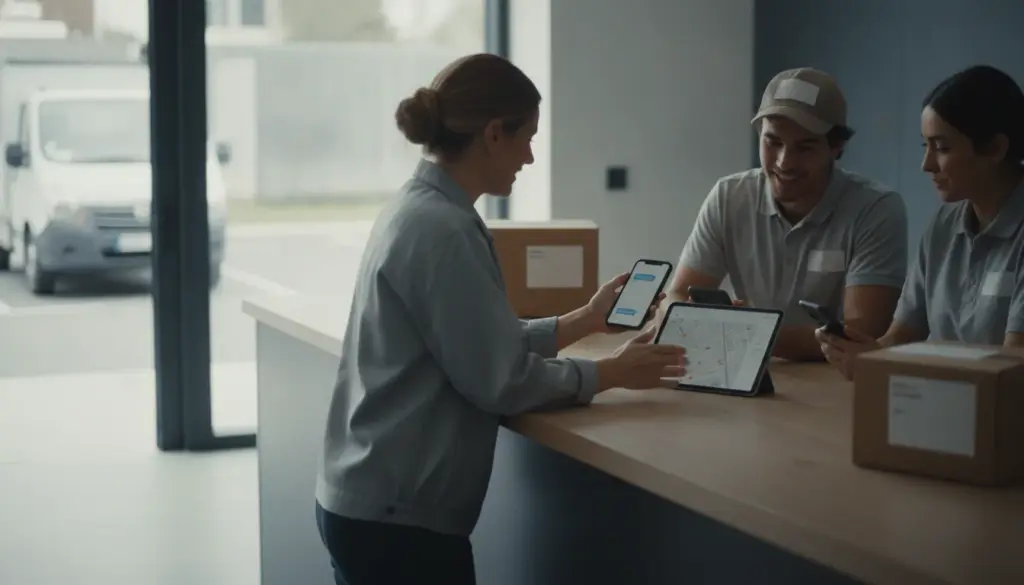
Shipping solutions that include SMS notifications keep customers informed from the moment an order is confirmed until the package reaches the door. For businesses that run water rounds, milk delivery, or LPG cylinder routes, the value is clear. SMS appears directly on the phone screen and, according to most industry studies, enjoys open rates above 90 per cent for time sensitive alerts. That immediacy lowers anxiety for households and restaurants waiting for milk crates, water refills, or cylinder swaps and also cuts the number of calls your team must answer during peak hours.
What happens behind the scenes
Most setups connect your order, warehouse, and transport systems to an SMS provider through an application programming interface, usually shortened to API. Each time a status in the order manager changes to confirmed, packed, loaded, out for delivery, delivered, or exception, that event calls a message template. The template inserts the customer’s phone number, name, order ID, address, and the new status, then places the text in a queue at your SMS gateway. Seconds later the customer receives a short real time alert that mirrors the update your driver has just logged.
Because the messages draw data from tools your staff already uses, no one needs to key information twice. The same integration supports personal touches, so a milk buyer can receive a morning window while an LPG buyer sees a safety reminder. You control branding in the template with your sender name where local rules allow and a tone that matches your wider customer communication.
What customers receive and when
Most customers see four core updates:
- Order confirmation sent right after checkout or a phone booking.
- Out for delivery with an estimated window so the recipient can prepare for a doorstep handoff.
- Exception notice covering issues such as no one home or blocked access.
- Delivered message with a brief recap and a link to any proof you captured.
Texts stay concise, and tracking links provide space for a live map, photos, or signatures. Water rounds follow predictable routes, so the second message can show a broad window plus a note on empty bottle pickup. Milk schedules are tighter and often early, so a plain status update that sets expectations is most helpful. LPG drops must include clear safety language and confirmation that the exchange took place. In every scenario an SMS update works best when it uses plain language and tells the customer the next step.
When richer content is useful, many operators pair email with SMS. Email carries full summaries, images, or long instructions while SMS delivers the instant ping for moments that matter. Competitor guides often recommend this dual channel approach, and it mirrors consumer behaviour in local delivery markets.
Configuration and consent
Every successful program begins with consent. Ask customers to opt in at checkout, over the phone, or when they create an account, and store proof of that permission. Rules differ by region, for example the United States follows the Telephone Consumer Protection Act, so check local law and legal counsel for wording and frequency limits. In daily work the most effective safeguards are clear language on what people will receive and a cap on how many texts you send per order.
Templates benefit from simple personal details. Mention the product and quantity for milk, the cylinder type for LPG, or the number of water bottles. Provide an easy reply path for address notes when drivers face gated communities or strict building rules. If you serve multiple languages, create versions and send the one that matches the preference recorded in your customer relationship manager.
Results for small delivery teams
Teams that adopt SMS status updates report fewer routine calls because customers already know where the order stands, allowing support staff to focus on unusual problems rather than constant where is my order questions. Satisfaction rises when people understand what is happening and when, a point many competitor writeups highlight. Operational gains show up in cleaner routes, fewer missed drop offs, and quicker handoffs.
If you manage water rounds, consider specialised Water Delivery tools that combine routing and messaging. LPG operators often need route planning tied to safety prompts, and LPG delivery software meets that need. Linking the delivered text to a simple POD page closes the loop with proof of delivery. Some teams also add a brief thank you or survey to gauge the experience.
At Tarsil we focus on clear status messaging, route visibility, and easy proof of delivery so your drivers keep customers informed without extra effort. When you map route constraints for cylinder swaps or narrow city streets, give the last mile details a place in the template. For a complete list of available options, see our features.