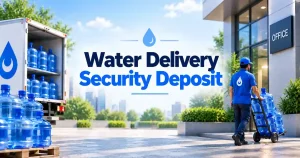

Delivering reusable five gallon jugs looks simple until deposit math goes wrong. Software built for bottled water routes stores every deposit, pickup, and refund in one place so what leaves the warehouse matches both the truck tally and each customer invoice. That accuracy matters most on home and office plans where the same bottles circle for months and liabilities pile up. Choosing capable water software therefore starts with getting deposits right and reducing paperwork.
The deposit lifecycle
Most distributors follow one of two patterns. The first is a refundable charge per bottle that appears the first time a client receives full bottles then disappears in equal credits as empties come back. The second is a one time security deposit for equipment such as a cooler that stays on site for the life of the account.
A new customer record in the back office includes the per bottle rate, any equipment deposit, and often a starting balance if the client just switched suppliers. Once that profile is saved, route accounting tools track the balance for every stop, in the same way coffee and beer distributors monitor kegs. When the customer orders four full jugs, the invoice shows product charges plus a separate deposit line. The money lands in a liability account inside QuickBooks or Sage rather than in sales income, an approach common to most competing platforms.
What drivers record
On the route the driver app is the frontline tool. At every stop, drivers enter how many fulls they leave and how many empties they collect. Some teams scan barcodes or RFID tags, while others simply type numbers. Either way, the screen shows the current bottle balance so driver and customer can agree instantly.
When counts are confirmed, the app creates an invoice listing products, any service fees, and either a new deposit charge or a credit for the returned bottles. Most systems support signature and photo capture as proof of delivery or pickup. That evidence matters for unattended drops at apartment buildings, where a photo of the full bottles by the door and another of the empties removed prevents later disputes. You can read a short proof overview if you need more detail.
Cash still dominates many routes in Pakistan and parts of the Gulf, so the mobile app lets the driver record payments and adjust open deposit balances on the spot. If the signal disappears during the day, all entries stay on the device and synchronise when coverage returns, keeping bottle counts and liabilities correct.
Keeping the ledger clean
Behind the scenes three ledgers move in step. First, inventory drops full bottles from the truck list and adds empties when the driver records a pickup. Second, the customer ledger posts deposit charges and credits next to normal product lines. Third, accounting pushes the actual cash to a separate liability account rather than to revenue.
Because all three entries post at once, managers can run a bottle balance report whenever they like. The report lists which customers hold the most empties and which routes bring back fewer bottles than they deliver. Customer statements can also list a summary line that explains why a given credit did or did not appear on the latest invoice.
When a customer pauses service, the software flags any outstanding deposit. If every bottle comes back, the liability clears and the finance team issues a refund through the linked accounting package. If empties are still missing after a set number of days, many businesses convert the open balance into a lost bottle fee. The rules differ by company but the mechanics are the same and the software supports both paths.
Beyond water routes
Deposit tracking is not confined to water deliveries. Milk distributors manage crate and glass deposits in exactly the same way, with driver apps capturing returns and back office tools updating balances. Our overview of milk software shows the near identical workflow. LPG suppliers follow the model too, recording full and empty cylinders at each stop and posting the cash to a cylinder liability account. You can examine the details on our LPG software page.
At Tarsil we focus on clear deposit visibility so route teams, customer service, and finance all work from the same numbers without opening spreadsheets. Independent reviews can help you compare route planning, recurring orders, and deposit handling across vendors. Most industry surveys agree on three baseline needs for home and office service: photo or signature proof of delivery, recurring route planning, and direct accounting integration. All three touch bottle deposits every single day.
Before signing a contract ask each vendor to show a demo of a delivery that creates a product sale, a deposit liability, a cash payment, and a photo proof in one swipe. If they cannot, keep looking.