From app to kitchen
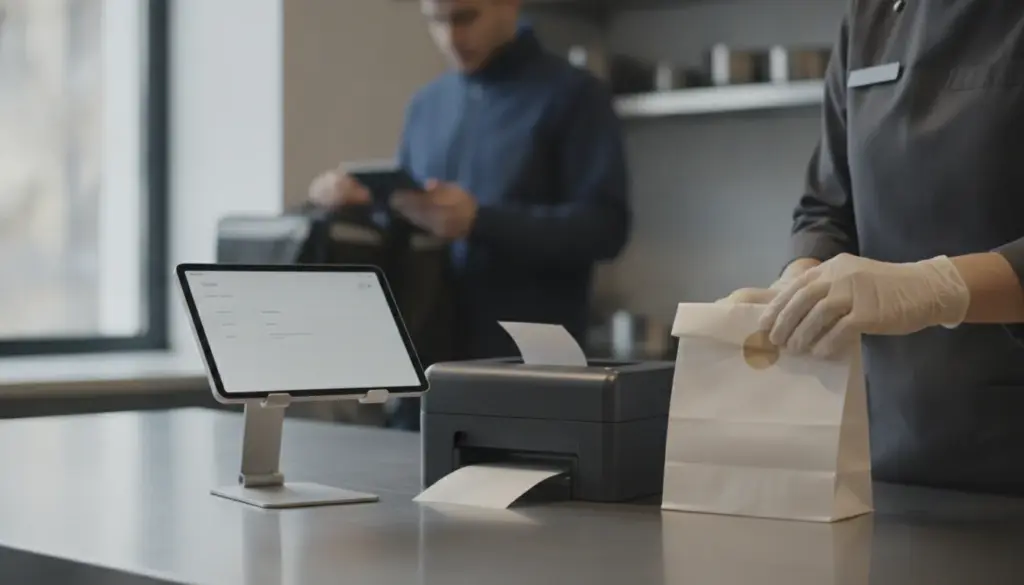
A customer taps the checkout button on a delivery marketplace or your branded site. An application programming interface, or API, listens for the event and copies order data into an integration layer. The layer interprets items, modifiers, addresses, and promise times, then matches products to the right code in your POS. The order appears on the POS as if a cashier had keyed it, and a ticket or kitchen display tells cooks what to prepare. The inventory module subtracts quantities so stock levels stay correct without manual updates. If staff cancel a dish or swap a water jar size, the integration posts the change back to the marketplace so customers see the update live.
When preparation finishes, a dispatch module selects a driver or hands the job to an external courier. Status messages flow both ways: accepted, in preparation, driver on the way, delivered. If you ship LPG cylinders or five-gallon water bottles, the process is identical, only the kitchen station is replaced by a loading bay where staff log weight and seal checks before the driver departs. Proof of delivery such as a photo, signature, or timestamp returns to the order record.
Benefits for high volume delivery
Restaurants and distributors in Pakistan and the Gulf juggle several ordering channels at once. Without integration, staff copy every ticket from a tablet into the POS. Double entry slows service and creates wrong items, missed modifiers, and refunds. Integrated flow cuts errors, shortens ticket creation, and frees employees to focus on food quality or safe loading.
During morning milk runs or evening cylinder refills, orders can spike. Most software lets you throttle intake or adjust prep times so the kitchen or warehouse receives what it can handle each quarter hour. A single menu lives in the integration, so price or recipe changes go live on every app instead of per branch. Groups with many locations value central control, and franchisees avoid selling outdated items.
Addresses in Karachi, Lahore, Riyadh, Doha, or Dubai vary. Rich address fields and customer notes travel into the dispatch panel, where staff confirm landmarks before the driver leaves. Because water and dairy are perishable, stock sync matters; out of stock items force cancellations and damage repeat purchase rates. Linking inventory to order intake lowers that risk.
What runs behind the scenes
The core engine is an API hub that authenticates to marketplaces, POS vendors, inventory databases, and couriers with tokens. Webhooks push new orders and cancellations as they happen, while the hub validates payloads, normalises field names, and routes data to the right store. Menu management maps items, modifiers, taxes, and fees to matching POS fields, so sales reports from the delivery app line up with your internal ledger.
Stable error handling is critical. If a network drop blocks posting, the hub puts the ticket in a retry queue until the connection returns. When a menu item on an app lacks a corresponding POS code, the system raises an alert so staff can fix the mismatch before service spirals. Detailed logs record each step for audits, and built‑in rate limits keep software friendly to partner APIs. Sensible vendors follow the principle of least privilege and make the privacy model clear.
Measure before and after
Choose a handful of metrics before signing a contract so you can prove value. Common picks include:
• Order error rate by channel
• Average time from receipt to POS ticket
• Cancellation and refund percentage
• Driver wait time at pickup
• Messages exchanged per order
Product specific checks also help. For milk and water distributors, track on-time delivery before dawn when customers expect breakfast. LPG operators should record safety steps for each route, such as seal verification and leak tests. Stockouts linked to catalogue items show whether inventory sync works, and proof of delivery counts reveal how often drivers capture evidence.
Collect feedback from staff during a pilot covering one or two branches. Simulate peak traffic, note exceptions, and read data permission scopes so you know who owns customer information gathered on third‑party apps. Some POS brands include direct connections for marketplaces, while others rely on aggregators that add fees. No single answer fits every operation, so test the path from order creation to cash reconciliation before rollout.
Teams that start small, prove one flow, and then add more channels see the smoothest results. The guiding aim is simple: remove retyping, keep menus consistent everywhere, show dispatchers a live status, and leave drivers with routes that make sense when they glance at their phone.