Water delivery and service software turns what could be a confusing mix of orders, bottle returns, and driver shifts into planned trips that cut mileage and improve punctuality. If you run home and office delivery routes, manage reusable jugs, or supply gas cylinders, you already know that routing involves far more than getting from A to B. It means knowing who needs what, when doors are open, how many empties are coming back, and which vehicle can carry them safely. Modern platforms such as water software treat this as a daily planning puzzle supported by live execution tools, recurring schedules, and clear proof of service.
What routing means for HOD and return logistics
A bottled water or LPG round is by nature two way. The driver drops full containers and at the same stop collects empties with deposits attached. The route therefore must reflect the load that leaves the warehouse and the load that returns, with weight and capacity recalculated after every stop. Industry reviews show that recurring route management and proof of delivery for unattended drops are essential for bottled water, where a driver may leave jugs at a doorstep and confirm the handoff with photos or signatures. The same pattern appears in milk and LPG rounds where empties and crates must be reconciled. For operators in Pakistan and the Gulf, compound access windows, building security, and midday heat make time windows and realistic service times even more important.
How software builds the plan each day
The planning engine first ingests orders and subscriptions then blends them with known limits. It respects customer time windows, driver shift length, vehicle capacity, stop service times, and historic traffic data. For regular customers, the system already knows the preferred day, frequency, and expected quantity. Stops are sequenced to avoid backtracking and to cluster deliveries in the same neighborhood. When subscriptions exist, the engine locks the promised weekdays or months, then fills open slots with on demand orders. Billing integration matters here, because failed payments or account pauses can remove a stop before it ever reaches a driver’s phone. Many operators use proof features to validate unattended drops and reduce later disputes.
Recurring schedules and returns handled together
Water delivery thrives on repetition. Customers expect the same day and roughly the same time and the warehouse needs a predictable load. Software therefore creates master schedules and rolls them forward week by week so drivers follow familiar loops. It also forecasts bottle returns from the last drop counts and deposit records, which prevents overloading a truck late in the day. In some systems, if a driver misses a pickup the platform automatically places a reminder in the next cycle so returns are not forgotten. For LPG and milk the same logic applies, although cylinder and crate rules may differ. Fleets that include cylinders can rely on LPG software that uses identical routing mathematics with extra checks for safe carriage and exchange counts.
Execution in the field with live adjustments
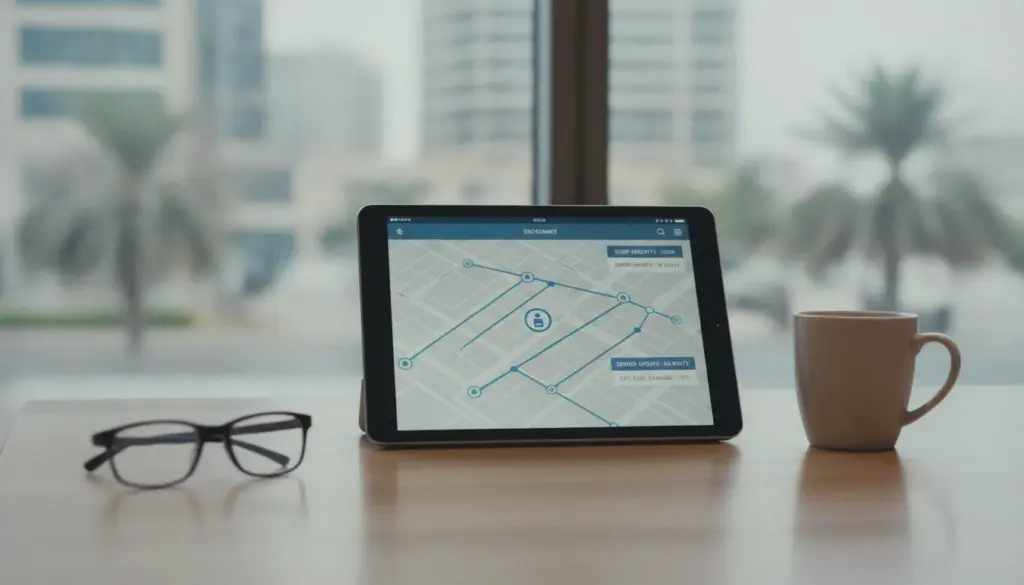
After routes are assigned drivers rely on a mobile app for navigation, gate codes, and customer notes explaining where to leave jugs. As each stop is completed the app records quantities delivered, empties collected, comments, photos, and signatures. Managers use this evidence to resolve questions and to trigger invoices automatically. If traffic or weather disrupts the sequence dispatchers can reshuffle remaining stops, move orders to a nearby driver, or send customers an updated arrival window. Photo based proof of delivery is especially valuable for unattended drops, a point repeated across competitor analyses of water delivery platforms. Supervisors can also view progress on a map with status updates that mirror each driver’s day.
Regional realities for Pakistan and the GCC
Routing in Karachi, Lahore, Riyadh, Jeddah, Dubai, or Muscat shows its own rhythm. Peak traffic hours differ by city, gated communities often need preapproval, and many households prefer deliveries outside prayer times. Software helps by saving neighborhood rules, preferred windows, and multilingual notes at the customer level. It also supports address validation where street names are inconsistent, using map pins and landmarks. For large jug and cylinder rounds, temperature and distance may push drivers into shorter shifts, so capacity and service time settings must match local reality. When you compare vendors, reading independent reviews beside a detailed features list will show whether the tool handles these regional needs.
At tarsil our platform combines recurring route management, deposit tracking for reusable jugs, and photo or signature proof for unattended drops while keeping the dispatcher view simple for busy teams in Pakistan and the Gulf.