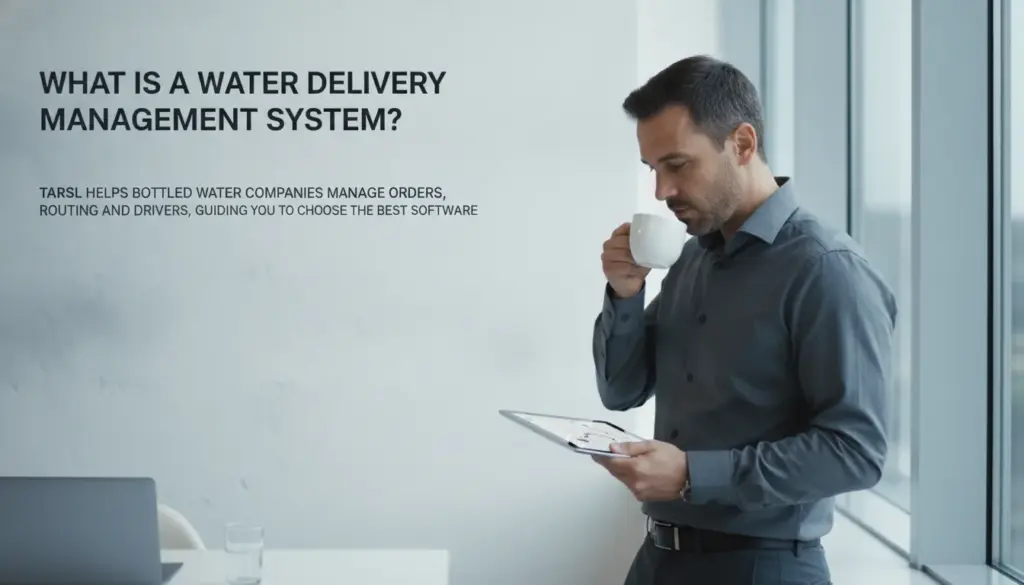
A water delivery management system is software that pulls every moving part of bottled water delivery into one place so routes, subscriptions, inventory, payments and customer updates work together without piles of registers and spreadsheets. If you run home or office rounds with reusable jugs you know how quickly details grow. Bottled water has led packaged drinks by volume in the United States for nine straight years, reaching 16.4 billion gallons in 2024, so route density is high and every missed step is costly. A platform built for water gives the daily grind a steady rhythm. The overview below explains what the system does and how to judge one for bottled water, milk rounds or LPG cylinders.
Core functions
The software first manages orders and schedules for both one time and recurring customers, then converts those schedules into driver friendly routes. Strong platforms support standing orders for people who receive delivery on the same weekday or on a set date each month. Route planning uses computer driven optimization so drivers cover more stops with fewer miles while staying inside promised windows.
On the road a driver app supplies turn by turn guidance, customer notes and a quick way to record partial drops, swaps or cash collected. If nobody is home the app confirms delivery through photos, signatures, barcodes or one time passwords, creating a clear chain of proof. For businesses that circulate returnable bottles, empty tracking reconciles what left the plant with what came back so deposits and shortages remain visible.
Behind the scenes subscription billing connects orders to invoices and renewals, cutting manual reconciliation. Customer communication tools send ETA texts, successful delivery notices and failed attempt alerts, so clients stay informed without extra calls. Dashboards show orders due today, returns pending and cash to settle so managers see the whole picture.
Who benefits
Water distributors use these systems to coordinate dense residential and office routes, trim out of route mileage and keep jugs in circulation without losses. Milk companies face similar neighborhood rounds and use the same tools for standing orders and quick doorway swaps. LPG cylinder suppliers move heavy assets with safety rules where scheduling, route planning and handover proof are equally important. Field managers need a live window into driver progress, exceptions and payment collection plus a record for later audits.
If you are judging options for water service it helps to see how the same concepts work for related categories like LPG software. The mechanics of routing, confirmation and asset tracking usually transfer smoothly across products and teams.
Capabilities that matter
Look for subscription and order control that supports many delivery cadences without manual calendar edits. The best tools let you pause or resume service, place vacation holds and issue credits for returned empties with a few clicks. Route optimization should respect service time, vehicle capacity and promised windows while still letting dispatchers drag stops for a human tweak before sending routes to the app.
Proof of delivery is crucial for unattended drops and invoice disputes. Make sure the app can capture photo evidence offline and sync later. If you handle deposits or cylinder swaps, inventory tracking must link returns to the right account. Connections to your accounting platform cut duplicate entry, and clean CSV exports provide a safety net.
Ease of use can outweigh feature lists. Crews that launch at dawn need an interface a new driver can understand in minutes. When you compare platforms read independent reviews and ask how support handles both onboarding and urgent tickets. For a quick view of the building blocks see this features page, and for bottled water specifics check the water delivery section.
Metrics that prove value
You will know the system works when key numbers improve.
- On time delivery rate should climb as routes match driver capacity and windows.
- Order accuracy rises when drivers see clear item counts and can document variances with photos.
- Delivery fulfillment rate shows how many scheduled stops finish in full.
- Out of route miles reveal where routes or address data need clean up.
Customer feedback offers an early read on service quality. Net Promoter Score and simple post delivery CSAT questions show whether timing and communication meet expectations. On the financial side, subscription led water companies track monthly recurring revenue and average revenue per user for a stable view of growth. For returnable assets watch shortages per route and aging buckets of unreconciled empties to keep deposits in check.
Choosing a system is less about a long spec sheet and more about a few proven outcomes that stand up under real routes, real customers and real returns