LPG cylinder delivery management felt like four separate jobs to Rashid, who runs a distribution business in Dubai. His order book showed 50 cylinders dispatched on Tuesday. The rider reported 42 deliveries, the warehouse counted 37 empties, and the cash sheet matched neither.
None of those numbers was wrong on its own. They just lived in four different places. So nobody could tell which gap mattered, or who should chase it.
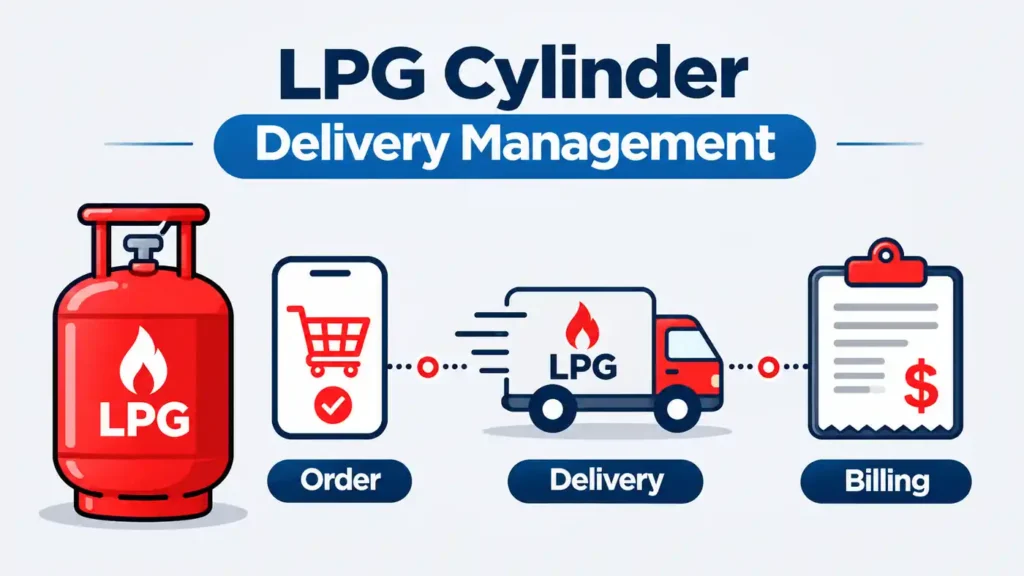
This guide walks through the full cycle, from the first customer order to the final bill. It covers custody for filled and empty cylinders, routes, failed deliveries, deposits, and credit sales.
Then it works through a complete sample day with the arithmetic shown. It also covers daily checks, KPIs, UAE and GCC notes, and where Tarsil fits.
What Is LPG Cylinder Delivery Management?
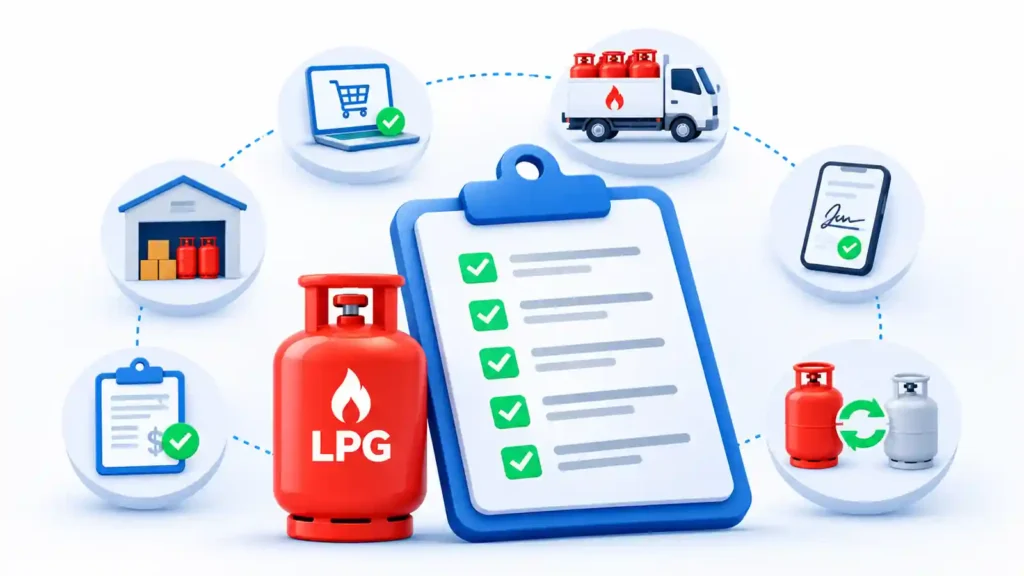
LPG cylinder delivery management means running orders, cylinder custody, deliveries, returns, and billing as one connected cycle. It answers three daily questions: who ordered what, who holds which cylinder, and who owes how much. Still, it does more than route planning. A delivery counts only when the cylinder balance and the invoice agree. Run well, the cycle gives you one answer to each question. Run badly, it gives you three answers that disagree.
Why LPG Cylinder Delivery Management Gets Difficult
Most problems start with disconnected records. Orders sit in a phone, stock sits in a notebook, and payments sit in a cash box. So every small gap needs a manual search to explain. And the search usually happens at month-end, when nobody remembers the details.
These are the gaps that cost the most:
- Riders skip a stop, and nobody records why.
- Empty cylinders stay with customers for weeks.
- Invoices go out at the wrong quantity.
- Stock counts stop matching the books.
- Payments arrive against invoices nobody can trace.
Each gap costs time, cash, or a customer’s trust. But none of them needs a large team to fix. They need every movement recorded once, in one place, by the person who made it.
Growth makes this harder, not easier. Every new rider adds a second set of slips. Every new branch adds a second stock count. Yet the owner still wants one clear picture by evening. That gap between records and reality is where cylinders, cash, and goodwill quietly leak.
How LPG Cylinder Delivery Management Works Step by Step
Six steps cover a normal day, from the first order to the final bill.
Step 1: Receive Customer Orders and Confirm Cylinder Stock
Log each order with the customer, cylinder size, and quantity. Then check filled stock before you promise a delivery slot. A promise you cannot fill becomes a failed delivery later.
Step 2: Prepare and Dispatch Filled Cylinders
Load each vehicle against its route list. Record the quantity and cylinder type before the vehicle leaves the depot. Once it leaves, those cylinders are in the rider’s custody until the return count.
Step 3: Assign Routes and Track LPG Deliveries
Give each rider a clear stop sequence. Then watch progress against it, so a delayed stop shows up early.
Step 4: Confirm Deliveries and Collect Empty Cylinders
At each stop, record what the customer received and what the rider collected. Keep those two numbers separate.
Step 5: Verify Warehouse Returns and Cylinder Balances
When the vehicle returns, count the empties and any unused filled cylinders. Then compare both counts against the rider’s record.
Step 6: Generate LPG Delivery Bills and Record Payments
Bill from confirmed delivery quantities, not from the original order. Then record each payment against the invoice it settles.
LPG Cylinder Inventory Management: Filled, Empty, Damaged and Outstanding
Four categories describe where every cylinder sits at any moment. Mastering these categories is the first step in proper LPG cylinder inventory management to track every stock movement.
| Category | Where It Sits | What to Record |
|---|---|---|
| Filled | Warehouse or vehicle | Quantity by size, ready to dispatch |
| Empty | Warehouse | Returned units waiting for a refill |
| Damaged | Separate area | Units pulled from circulation, with a reason |
| Outstanding | With customers | Balance per customer, by cylinder size |
Customer holdings are not warehouse stock. Mixing the two lets a healthy warehouse count hide a growing customer balance. So keep one ledger for what you hold and another for what customers hold, which is the foundational rule of proper LPG cylinder return tracking to prevent missing assets. Damaged cylinders deserve their own line, so a unit pulled for inspection never gets counted as available stock.
How to Manage LPG Cylinder Delivery Routes and Drivers
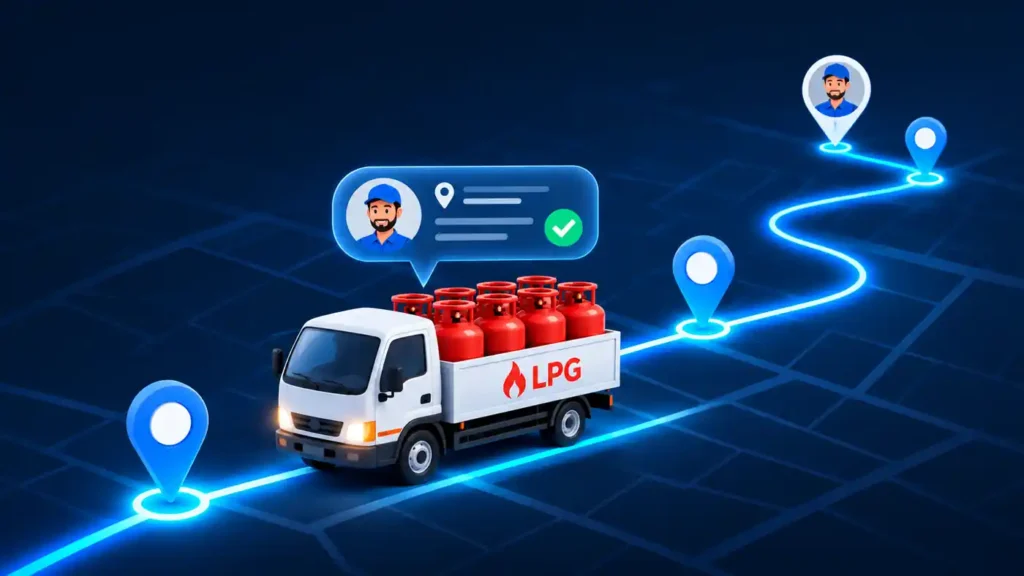
A good route plan groups stops by area and cylinder load. A good driver process proves what happened at each stop.
Route Planning for LPG Delivery
Group orders by area and delivery window before loading. Still, leave room for urgent same-day requests, because they break most fixed routes. Then load in reverse stop order, so the first delivery sits nearest the door. And check the heaviest loads against each vehicle’s capacity before dispatch.
Rider Tracking and Proof of LPG Delivery
Location tracking shows where a vehicle is. But it does not prove that a cylinder reached the customer. So pair tracking with a recorded confirmation at every stop, including the quantity delivered and the empties collected.
Failed Deliveries and Missing Returns in LPG Cylinder Delivery Management
Failed deliveries and missing empties happen on every route. Implementing proper LPG cylinder return tracking is how you catch them fast and prevent losses. Common causes include a customer being out, an incorrect address, a disputed exchange, or a partial collection. Handle each exception in five moves: detect, investigate, assign, resolve, and verify.
Flag the gap the moment two counts differ. Then check the route log and call the last customers on that route. So the investigation starts with facts, not blame. Assign one person to own the case. Resolve it with a recorded outcome, such as a redelivery or a corrected balance. Then verify the result in the next day’s count.
Never write off an unexplained difference automatically. A gap stays a question until the evidence closes it.
Cylinder Deposits, Credit and Billing in LPG Cylinder Delivery Management
Three balances often get mixed into one: cylinders with customers, deposits held for them, and unpaid sales.
Cylinder Deposits and Customer Balances
A deposit is a sum you keep for the cylinder until it comes back. And it stays separate from the cylinder count. A returned cylinder clears the physical balance, and the deposit refund follows as its own entry a process we explain fully in our dedicated guide on LPG cylinder deposit tracking and how to manage customer deposits and refunds. In the UAE, deposit practice varies by distributor and cylinder size. So treat every AED figure in this guide as an illustration.
Credit Sales, Invoices and Payment Collections
Credit sales create a receivable: money the customer owes for gas already delivered. Strong billing and credit control means invoicing from confirmed delivery quantities, then recording each payment against the invoice it settles. Still, keep unpaid balances apart from cylinder balances. One customer can owe cash and hold no cylinders, or the reverse.
LPG Cylinder Delivery Management in Practice: A Complete Sample Day
Here is one day for a single delivery truck in Dubai. All figures are illustrative examples, not real customer data.
The Sample Day Cylinder Ledger
| Physical Movement | Cylinders |
|---|---|
| Filled cylinders dispatched | 50 |
| Filled cylinders delivered | 42 |
| Undelivered filled cylinders returned | 8 |
| Empty cylinders collected at stops | 38 |
| Empty cylinders received in warehouse | 37 |
| Empty-cylinder discrepancy to investigate | 1 |
The filled ledger balances: 42 delivered plus 8 returned equals 50 dispatched. The empty ledger does not. Thirty-eight collected minus 37 received leaves one cylinder to investigate. That is an open question, not proof of theft or loss.
And 42 delivered against 38 collected means customers now hold 4 more cylinders than before. That raises customer balances, which is a separate matter from the one-cylinder warehouse gap.
The Sample Day Financial Ledger (AED)
| Financial Movement | AED |
|---|---|
| Sales invoices issued | 4,200 |
| Customer payments received | 3,500 |
| Unpaid invoice balance from the day’s sales | 700 |
| Refundable cylinder deposits collected | 300 |
| Cylinder deposits refunded | 100 |
| Net change in deposits held for customers | +200 |
The AED 700 receivable and the AED 200 deposit change are money. The cylinder counts above are not. So never offset one against the other. A customer who owes AED 700 may hold no cylinders, and a customer holding four may owe nothing. A full account statement would also show each customer’s opening balances.
LPG Cylinder Delivery Management in the UAE and GCC
UAE households and small businesses often exchange one empty cylinder for one filled cylinder at the door. But commercial accounts, such as restaurants, often hold several cylinders under an agreed limit. So the same cylinder count can mean different things for different customers. Multi-branch operators across the GCC add a third layer: a cylinder issued by one branch can return to another. Each transfer needs its own record.
Still, distribution arrangements and safety obligations differ by emirate and country. So check local authority rules directly before you design any process around them.
Daily LPG Cylinder Delivery Management Checklist
- Verify the day’s orders against available filled stock.
- Then load each vehicle against its route list.
- Record every handover between warehouse and rider.
- Capture proof of delivery at each stop.
- Log empties collected, separate from filled cylinders delivered.
- Then count returns at the warehouse before the rider leaves.
- Match payments to the invoices they settle.
- And resolve or log every discrepancy with a named owner.
- Get supervisor sign-off on the final counts.
Run these in order, and most gaps surface the same day instead of at month-end.
Key KPIs for LPG Cylinder Delivery Management
Start with six numbers. Each one points to a specific operational problem. So read them together, not one at a time.
- Delivery completion rate: deliveries finished out of deliveries planned.
- Failed deliveries: stops where the cylinder did not reach the customer.
- Outstanding cylinders: cylinders customers hold, tracked by account.
- Return discrepancies: empties collected minus empties received.
- Collections against invoices: cash received compared with amounts billed.
- Unresolved exceptions: open cases with no recorded outcome.
The wider logistics industry tracks a similar idea called on-time in full. DHL Freight Connections explains it as complete, on-time deliveries divided by total deliveries. So your completion rate works the same way. Still, count first and set targets later. Targets without a baseline are guesses.
Manual vs. Digital LPG Cylinder Delivery Management
Paper and spreadsheets can run a very small operation. But past a few vehicles, matching everyone’s numbers by hand slows down and invites errors.
| Area | Manual | Digital |
|---|---|---|
| Orders | Phone calls and notebooks | One order record per customer |
| Custody records | Separate stock sheets | Linked filled, empty, and customer balances |
| Rider progress | Phone calls to ask | Logged stops and confirmations |
| Reconciliation | Hand cross-checks at night | Same-day count comparison |
| Billing | Rebuilt from delivery slips | Generated from delivery records |
| Reporting | Compiled at month-end | Available as records update |
Digital systems built for LPG, such as Tarsil’s LPG cylinder delivery software, keep these records connected. Still, software only works with correct inputs. A skipped entry breaks the chain the same way a missing slip does.
Where Tarsil Fits Into LPG Cylinder Delivery Management
Tarsil brings customers, orders, cylinders, deliveries, drivers, and billing into one system. Riders log delivered and collected quantities from the driver app at each stop. So the warehouse is not reconciling from memory at day’s end. Deposits and customer cylinder balances sit alongside the billing records.
Still, Tarsil supports the record-keeping and visibility. Your team investigates each exception. Tarsil does not replace sound LPG cylinder delivery management. It gives your team one record to manage from.
Book Your Free Demo Today → See how this would work for your own LPG delivery business.
FAQs About LPG Cylinder Delivery Management
How do you manage LPG cylinder deliveries?
Record each order, dispatch filled cylinders against a route list, and confirm every delivery. Then count returns and bill from confirmed quantities.
How do you track filled and empty LPG cylinders?
Keep separate counts for filled, empty, damaged, and customer-held cylinders. Update them at dispatch, at each stop, and at warehouse return.
How do you reconcile LPG riders at the end of the day?
Compare cylinders dispatched, delivered, returned, and collected against the warehouse count. Investigate any difference before closing the day.
How do you manage LPG cylinder deposits?
Track the deposit as money, separate from the cylinder count. A returned cylinder clears the custody balance, and the refund follows as its own entry.
How do you track failed LPG deliveries?
Record the attempt, the reason, and the next action for every undelivered stop. Then review open cases daily until each one has an outcome.
Which KPIs should an LPG delivery business track first?
Start with delivery completion rate, failed deliveries, outstanding cylinders, and return discrepancies. Add collections and unresolved exceptions once those hold steady.