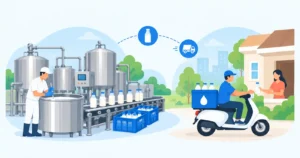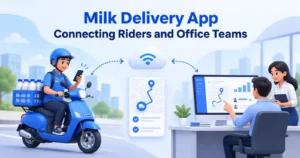

Delivery software turns incoming orders into completed drops at the customer’s door. It replaces phone calls and spreadsheets with a single picture of order intake, dispatch, routing, driver tracking, delivery proof, and customer communication. For a water distributor, a milk round, an LPG supplier, or a field service team, the goal stays the same: fewer manual steps, fewer missed stops, and faster reactions when something changes on the road.
Core workflow
Orders arrive from the web, phone, point of sale, or a marketplace. The system validates each address, groups nearby stops, and notes access codes or heavy loads. Dispatchers then see a live queue. They can assign jobs by hand or let automation match tasks to drivers by skill, vehicle, and location. Routes are built with map data, traffic, time windows, and van capacity in mind.
Drivers open a mobile app that shows turn by turn navigation, task lists, and digital forms. Customers receive real time tracking links and status alerts that reduce where is my order calls. At the door the driver captures photos, notes, barcodes, or signatures. These items close the job in the system with time and location stamps. Teams looking at different ways to collect evidence can read more about suitable delivery proof.
Sector specifics
The same building blocks serve many trades, but each uses them a little differently.
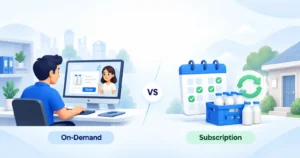
• A water delivery firm leans on recurring orders, bottle returns, and deposit records. The app must let the driver swap items quickly and record empty counts.
• Milk routes often start before dawn and cover dense clusters of stops. Correct planning and quiet hour alerts are therefore vital.
• An LPG cylinder supplier needs serial number scans, safety photos, and a clear log of full and empty cylinders.
• Field service crews depend on job forms, parts usage, and before and after photos, plus the customer’s sign off on the work.
Choosing the right platform
Begin with the basics: capture orders from every channel, dispatch them quickly, plan correct routes, and give drivers an app that works offline. Clear customer communication is just as important, using SMS or WhatsApp plus a branded tracking page. Make sure delivery proof matches your industry rules, such as signatures for controlled goods or barcodes for serial numbers. If you mix in house and third party drivers, confirm that the platform lets outside couriers join your workflow without hiding data. Many teams now request AI insights that flag repeated delays or drivers who need help. A clear features page makes side by side checks easier.
Think about where orders live and how you invoice. If an ERP or a point of sale feeds your business, check whether the software connects through files or open APIs. Companies that manage refunds from marketplaces may want guided flows that collect the right field evidence and track the claim in one place. When seasonal peaks double your volume, test whether the platform still assigns routes in seconds and whether you can split drivers into regional groups. Ask how driver onboarding works, how permissions differ for dispatchers and managers, and how audit logs record changes.
Customer impact and compliance
Customers notice when updates are timely. Live tracking pages cut uncertainty, while early warnings about delays respect their schedule. Some vendors add quick review prompts on the tracking page to gather feedback that can help local search rankings. If this matters to you, choose a tool with message timing and editable templates instead of fixed text.
Regulated or safety sensitive sectors need special checks. Gas deliveries may require step by step leak tests, valve photos, and customer acknowledgments. For milk and other perishables, temperature notes and narrow delivery windows are key metrics. Dispatchers can watch route progress, move jobs from drivers who fall behind to those who finish early, and intervene before a stop is missed. Reading real world reviews shows whether a platform supports these routines day after day.
Site details and territory insight
When you serve restaurants or apartment buildings at scale, store and reuse site access rules. Loading docks, gate codes, and landmarks save minutes at every stop. Teams expanding into new neighborhoods often rely on territory based routing and map level insight to spot streets where they are always late. Large kitchen accounts that order in bulk can also benefit from guidance on tools built for standing orders in addition to the core delivery flow described above.