
Choosing delivery software for the Gulf Cooperation Council is not about buying a single plug-in. Water, milk, LPG cylinders, and courier operators each work to a different beat, and regional quirks such as nonstandard addresses, WhatsApp expectations, extreme heat, and strict zone accounting turn a generic platform into a headache. The best tool handles those details without extra clicks and grows with you as routes expand across cities and borders.
What a strong GCC fit looks like
Start with proof points. Route planning must accept dozens of stops per trip and let dispatchers reshuffle quickly when a customer is not at home. Live rider location should appear on the dispatcher screen within seconds so callers get instant answers. Proof of delivery protects you from disputes when it captures photos, signatures, timestamps, and notes. Because cash on delivery is still common, reconciliation by driver and zone must be clear. Arabic menus and simple right to left screens encourage field crews to adopt the app on day one. Inventory control and zone level reporting show managers where clusters thrive or slip. Compare vendors against this features list before you schedule demos.
Rules and documents differ across GCC countries, so pick a platform that can adjust workflows and printouts country by country. Status alerts slash repeat calls to your call center. Test the mobile app on weak data signals and sun-baked devices, because lost productivity in the field hurts more than slick slides.
When you run water or milk distribution
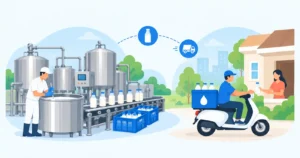
Water and milk fleets face challenges that courier tools often ignore. Top of the list is container tracking. If you move nineteen liter bottles or milk crates, you need jar and deposit balances linked to every stop. Missed locations create churn, so riders must be able to refine map pins on the fly and follow zone wise routes. Billing should flow from completed drops and stock movements, giving finance clean receivables by route instead of fragile spreadsheets. Alerts for inactive customers help the sales team win families back before they leave.
If that rings true, look at water specific workflows first. The difference shows in moments: a rider records empty jar pickups alongside full deliveries and deposits roll forward into the next cycle. While customers track the rider in real time, managers view inventory, billing, and run sheets from one cloud dashboard.
When you manage LPG cylinder routes
LPG routes move to a different rhythm. Restaurant orders spike before lunch and dinner, while household refills demand predictable windows. A system must know cylinder sizes, valve types, swap in swap out counts, and safety checks logged in the field. Because one late truck can halt a kitchen, the dispatcher needs fast rescheduling for peak periods. Photo evidence of hookups and leak tests secures compliance records.
Inspect how the platform supports last mile workflows and bulk customer rules. Restaurant clusters often rely on standing orders that repeat throughout the week. Household routes need quick rescheduling and reminder messages. Good LPG software tracks cylinder balances by customer so your assets return to the depot without guesswork.
When you run mixed courier or freight
Courier operators in the UAE, Oman, or Saudi Arabia lean toward systems that include master data management, barcode and waybill scanning, and detailed cost reporting. Practical capabilities include dynamic rate tables by route or service level, multi stop trip building for dense neighborhoods, and support for full truckload and less than truckload freight. A single mobile app for pickups, deliveries, and exceptions keeps drivers off paper and onto the next task.
Proof of delivery remains the centerpiece. Look for flexible proof options: photos of damaged parcels, one-time passwords or signatures for residential drops, and driver notes that flow to customer service. Integrated accounting and fleet views help managers reconcile cash on delivery, mileage, and time. Shiny extras are fine, but your test question is simple: can dispatchers and riders finish the job with fewer taps, and do the reports answer what finance asks every Friday?
Making the choice for your business
Shortlist two or three platforms that match your sector and fleet size, then run them on a route with a small customer sample. Ask riders whether the app removes steps instead of adding them. Time how long it takes the dispatcher to build tomorrow’s run. Confirm that managers can see inventory and receivables at day-end without chasing messages. At Tarsil, our system connects deliveries, billing, inventory, finance, and reporting for recurring models, especially bottled water, and we build screens with GCC field realities in mind.
Delivery software for the GCC succeeds only when it mirrors your routes, assets, and customer habits rather than forcing you to mirror the software.