
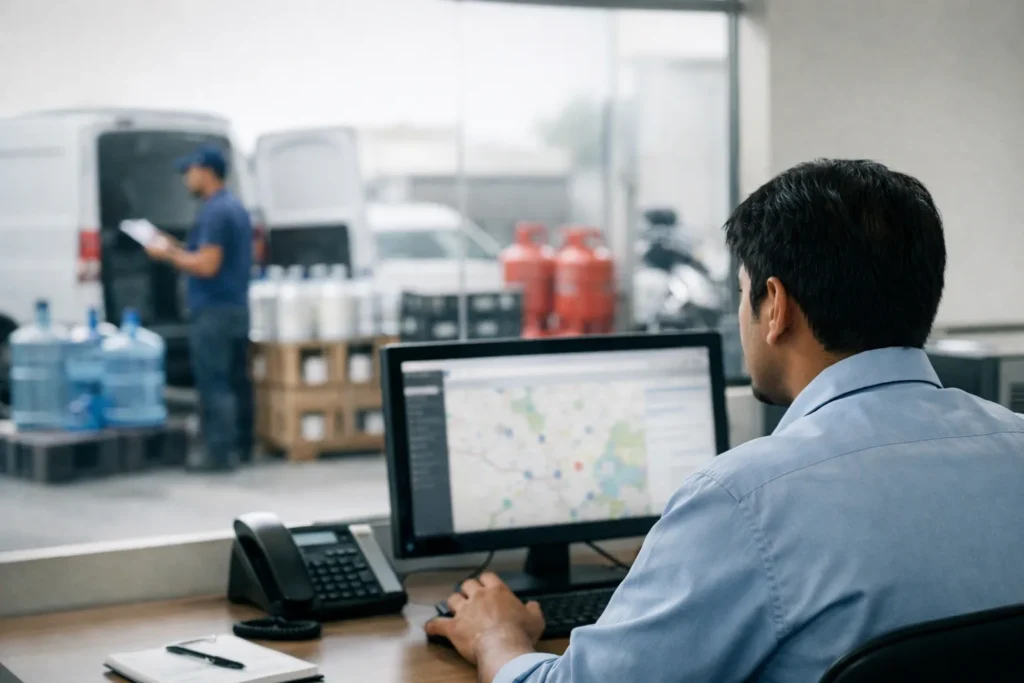
The best delivery dispatch software depends on what your team delivers, how customers place orders, and what happens after a driver leaves the depot. A water supplier collecting empty bottles has different needs from a parcel courier. Milk delivery businesses may manage recurring household orders, while LPG distributors must track cylinders, collections, and customer balances. Brand comparisons are useful only when they reflect these daily realities.
Several established brands deserve consideration, including Tarsil, Onfleet, Tookan, OptimoRoute, Routific, and DispatchTrack. Each approaches dispatch management differently. Some focus on route planning, while others offer broader control over drivers, orders, notifications, and delivery tracking.
Brands worth comparing
Tarsil is designed for water, milk, and LPG cylinder operations. Its delivery software combines real time tracking with operational automation in one platform. This focus matters when a business handles recurring deliveries, container returns, route billing, customer balances, or frequent order changes. A general courier platform may require additional processes to manage these activities.
Onfleet is often considered by last mile delivery operators that need dispatch visibility, driver management, proof of delivery, and customer notifications. It may suit businesses whose work centers on individual delivery tasks rather than reusable containers or subscription rounds.
Tookan is another general delivery management platform. It focuses on task assignment, driver tracking, and field operations. Businesses with several service types may find this broad structure useful, although they should check how the platform handles recurring orders and product returns.
OptimoRoute and Routific place strong emphasis on route planning and scheduling. They are relevant when vehicle capacity, delivery windows, driver shifts, and stop sequencing create daily planning pressure. Buyers should still assess how each product handles billing, collections, stock movement, and customer accounts.
DispatchTrack is associated with larger last mile operations, delivery visibility, and customer communication. Fleet managers considering it should test the administrative workload as carefully as the driver experience.
What the platform should handle
A polished route map does not necessarily mean the software suits your operation. Water delivery managers should assess bottle deposits, empty container collections, missed deliveries, and changes made while a vehicle is already on its route. Milk delivery businesses should test pauses, quantity changes, recurring schedules, and household account records. LPG distributors need clear processes for cylinder returns, exchanges, and delivery confirmation.
The driver app also deserves close attention. Drivers may work in areas with weak mobile coverage, crowded streets, or addresses described by landmarks. Ask whether they can view the next stop, call the customer, record a payment, mark returned containers, and update an order without moving between several screens.
Real time delivery tracking should help dispatchers as well as customers. A manager needs to see completed stops, delays, failed visits, and unassigned orders without repeatedly calling drivers. Customer notifications should reflect genuine delivery progress rather than a fixed schedule that no longer matches the route.
How to compare vendors fairly
Use the same operating scenario in every product demonstration. Provide a sample route with recurring orders, one late customer request, a failed delivery, returned containers, and a driver collecting payment. Then note how many manual steps are required from order entry through dispatch and reconciliation.
Check whether the system maintains a clear record of who changed an order and when. This is particularly important when office staff, drivers, and customers can all request updates. Permissions should prevent drivers from viewing information outside their responsibilities while still giving them enough detail to complete each stop.
Reporting should answer practical questions. Can the dispatch manager identify unfinished deliveries, repeated failed visits, driver cash awaiting reconciliation, and containers that have not been returned? Can users filter records by route, driver, date, customer, and product? Test data exports as well, since accountants and operations managers may need records outside the dispatch platform.
Support should be assessed through realistic questions rather than response time promises. Ask who helps with account setup, route migration, driver training, and changes to recurring delivery records. Businesses operating across Pakistan, the Gulf, or Africa should also confirm language, location, connectivity, and local workflow support directly with each vendor.
Before choosing a brand, let dispatchers and drivers complete a live trial using familiar orders. Give one driver a changed quantity, another a failed stop, and the office team an urgent order that must join an active route. Record where staff hesitate, which details they enter twice, and whether the final customer and delivery records match the work completed in the field.