Idris runs a milk delivery operation out of Kampala. When he started pricing milk-delivery app development quotes, every agency gave him the same first number and left out the same second. The build cost looked reasonable. So what happened after launch did not come up until he asked.
That is the part most quotes skip. An agency will happily price the app you can see in the demo. So it stays quiet about the maintenance, the updates, and the day your one developer who understood the code takes another job. Still, before you sign anything, it helps to separate what a quote covers from what owning the app actually costs.
What Is Milk Delivery App Development?
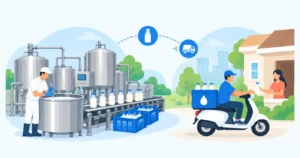
Milk delivery app development is the work of designing, building, testing, and maintaining a custom app for a milk or dairy delivery business — usually a rider app, a customer-facing order screen, a backend to run standing orders and billing, and the ongoing upkeep needed to keep all of it running as phones and the business change.
You will also hear this called milk delivery software development, or simply building a milk app. If you are exploring this technology for the first time, it helps to understand the broader category by reading our foundational guide, Milk Delivery Software: The Complete Guide to Daily Routes and Monthly Billing. In the dairy trade specifically, the same work is sometimes labelled dairy app development, though the scope stays the same: design, build, test, maintain.
When a Custom Milk Delivery App Actually Makes Sense
Building your own app is sometimes the right call, so give it a fair hearing before moving on.
Your billing or route logic is genuinely unusual
Most dairies share the same core needs: standing orders, daily quantity edits, and a bill that closes on time. But if your operation runs something a ready platform genuinely cannot flex around, a custom build earns its cost.
You already have an in-house team to maintain it
If developers already work for you full-time, the economics shift. Because the real cost of a custom app is not the launch; it is everything after, and an in-house team can absorb that work without hiring an outside agency every time something breaks.
For most operators, though, neither case applies. So the honest default, most of the time, is to buy.
What a Milk Delivery App Development Company Leaves Off the Quote
A quote prices version one. So it rarely prices what comes next, and that is exactly where custom projects run over.
Maintenance never stops
Phones update twice a year, and new handsets arrive constantly, so an app that works today can break next month. Maintenance is not a one-time task — in fact, by most estimates, it makes up the majority of what software costs across its life.
Wikipedia’s software maintenance overview puts the maintenance phase at 80 to 90 percent of total lifecycle cost, once you count everything after the first release (software maintenance lifecycle cost). So the number on the quote is rarely the number you end up paying.
Daily quantity changes make billing logic harder than it looks
A milk order rarely stays fixed. One customer adds half a litre on Monday, cuts it on Friday, and expects one clean bill at month’s end that reflects every change in between. Generic developers underestimate this. Because the billing has to prorate correctly against a quantity that moves daily, a small mistake here turns into a customer dispute over money, not just a bug report.
Predawn routes need offline-first design, not just a map
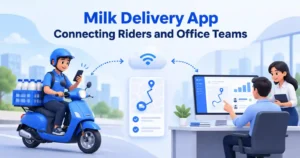
Milk delivery runs before sunrise, often in areas where signal drops in and out. A map API shows a road, but it does not keep working when the rider’s phone loses connection mid-street. Deploying a dedicated Milk Delivery App: Connecting Riders and Office Teams ensures that field updates are captured offline and synced instantly once connection returns. So the app has to log a delivery offline and sync later without losing data, and that is a specific, non-trivial piece of engineering most quotes never mention by name.
Custom Milk Delivery App vs. Ready Platform: A Three-Year View
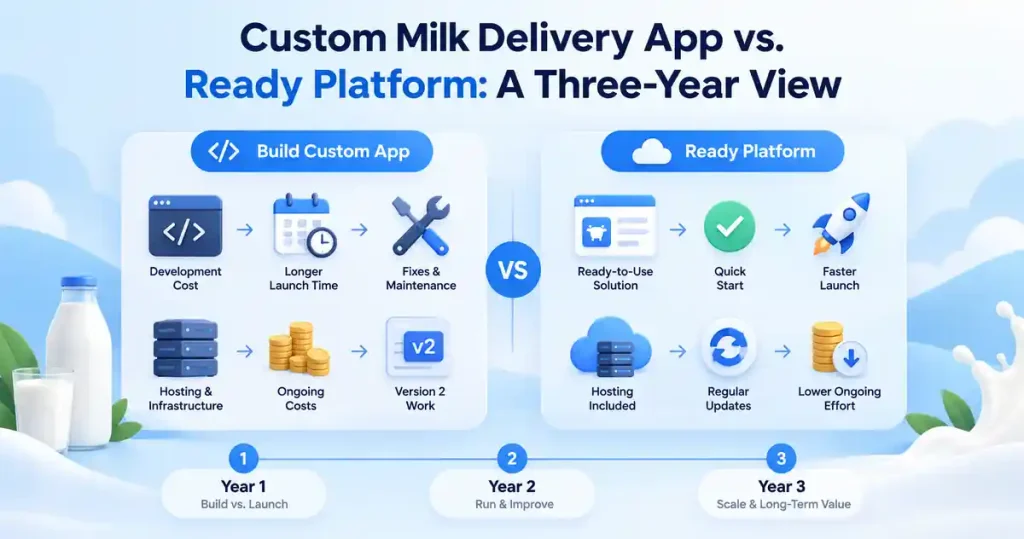
Judge both paths over three years, not three months, because that is where the real cost difference shows up.
The build path over three years
You pay for the build, wait months for launch, then start paying again — for fixes, for hosting, for the version two your business will eventually need. Meanwhile, your attention splits between running deliveries and running a software project, which is rarely where an owner’s time is best spent.
The buy path over three years
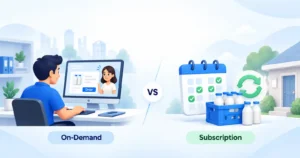
You start on a ready platform in minutes, not months. Updates, hosting, and fixes come included, because the vendor spreads that cost across every customer on the platform. So your money goes toward deliveries, not debugging, and the daily quantity-change problem above is already solved and already tested.
Where Tarsil Fits
Tarsil is the buy path, built specifically for milk and dairy delivery: standing orders, daily quantity edits, rider apps, and monthly billing, all connected from day one. So you can see the full system on the features page.
See it before you sign an agency quote.
Start Your 14-Day Free Trial → No credit card required, and most dairies are live within three to four minutes of signing up.
Questions to Ask a Milk Delivery App Development Company Before You Sign
Before you commit to a build, ask the agency these directly, and judge the answers as closely as you judged the demo.
- What does year two cost, not just year one?
- Who maintains the code if the original developer leaves?
- How does the app behave when a rider’s phone loses signal mid-route?
- How is a mid-month quantity change reflected in the final bill?
- What do you own if you end the contract — the code, or just the app?
A milk delivery app development company that answers all five clearly is rare. Most avoid at least one.
The Bottom Line
Price the three years, not the launch. Build only if your logic is genuinely unusual or you already have developers on staff. Otherwise, buying wins. Because milk delivery app development rarely costs what the first quote says, the real bill usually shows up in year two instead.
Idris never signed that first Kampala quote. So the follow-up questions about year two told him everything the demo did not.
Want to compare a ready platform against your own agency quote?
Book a Free Demo → Bring the quote. Then we’ll walk through the real cost of milk delivery app development together.
FAQs: Milk Delivery App Development Questions
What is milk delivery app development?
It is building a custom app for a milk or dairy business — a rider app, a customer order screen, a billing backend, and the ongoing maintenance to keep it all running.
How much does a custom milk delivery app cost to build?
The build itself is only the first number. Maintenance, hosting, and updates add cost every year after launch, and together they typically outweigh the original build.
Is it cheaper to build or buy milk delivery software?
For most dairies, buying wins. A ready platform spreads hosting, updates, and fixes across many customers, so you avoid carrying the full lifetime cost alone.
What makes milk delivery app development harder than a generic app?
Daily quantity changes that must prorate correctly into one monthly bill, and offline-first syncing for predawn routes with patchy signal — neither is a standard feature in most app-building toolkits.
How long does a custom build take versus a ready platform?
A custom app usually takes several months for a first version. A ready platform can have you live in minutes.
Does this build-vs-buy decision look different in the GCC, Africa, or Pakistan?
Not structurally. Operators from Kampala to Doha to Karachi face the same maintenance and billing-logic costs — only the currency and the agency quotes in front of them change.